
Last updated November 16, 2026
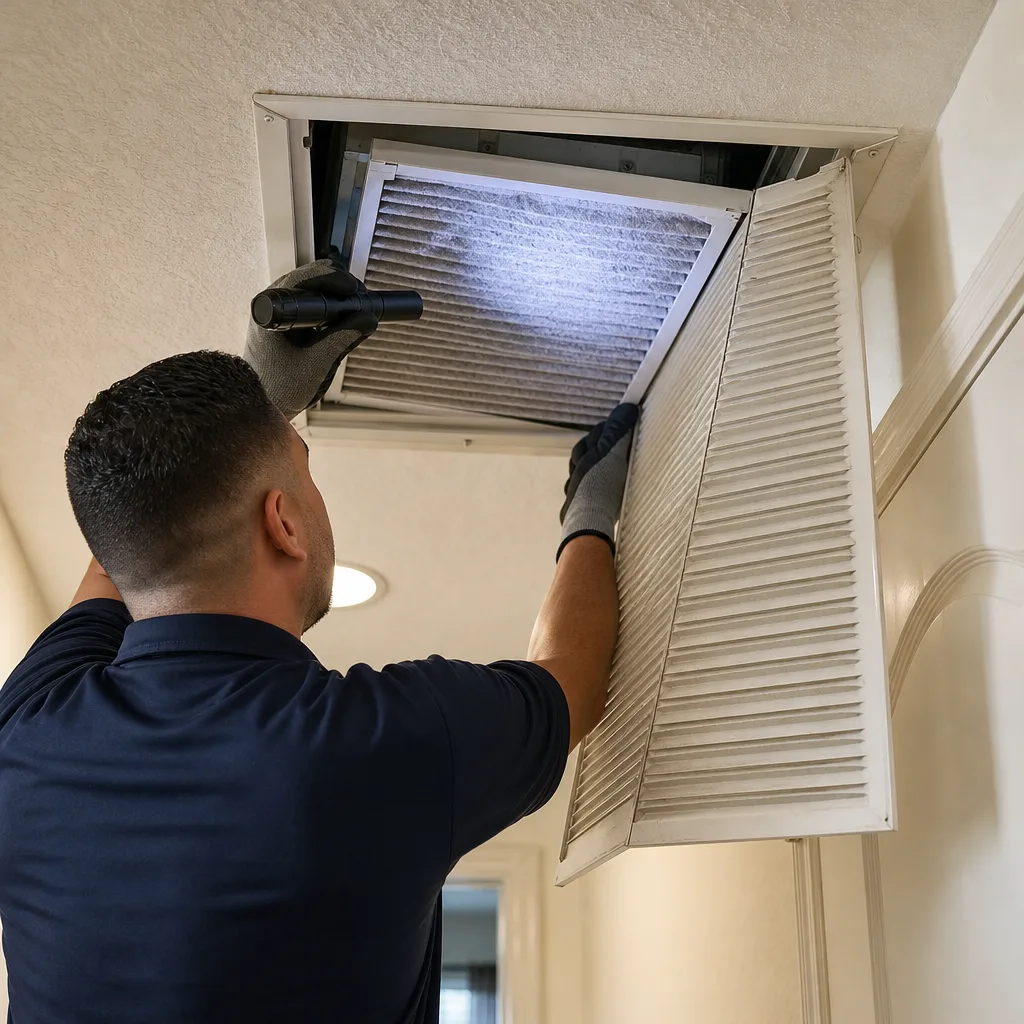
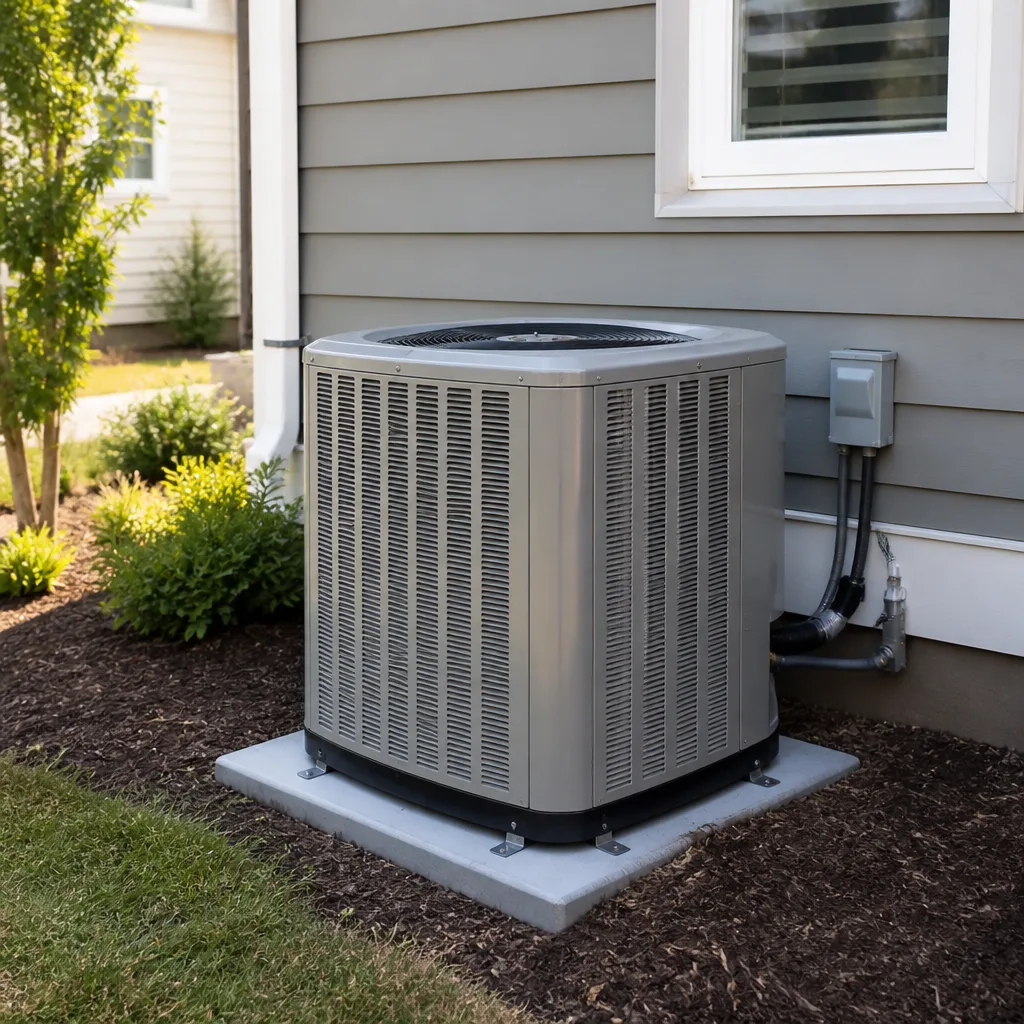 AC repair
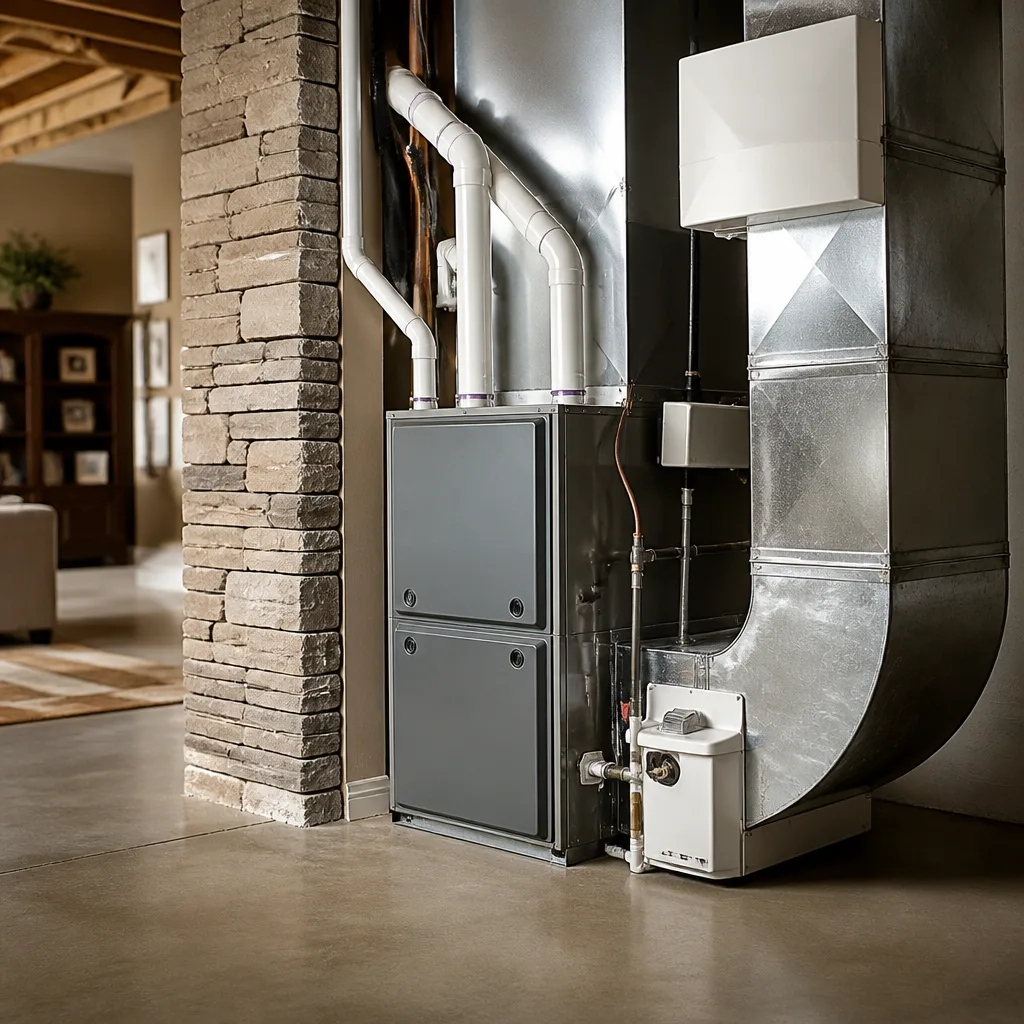 Furnace & heating
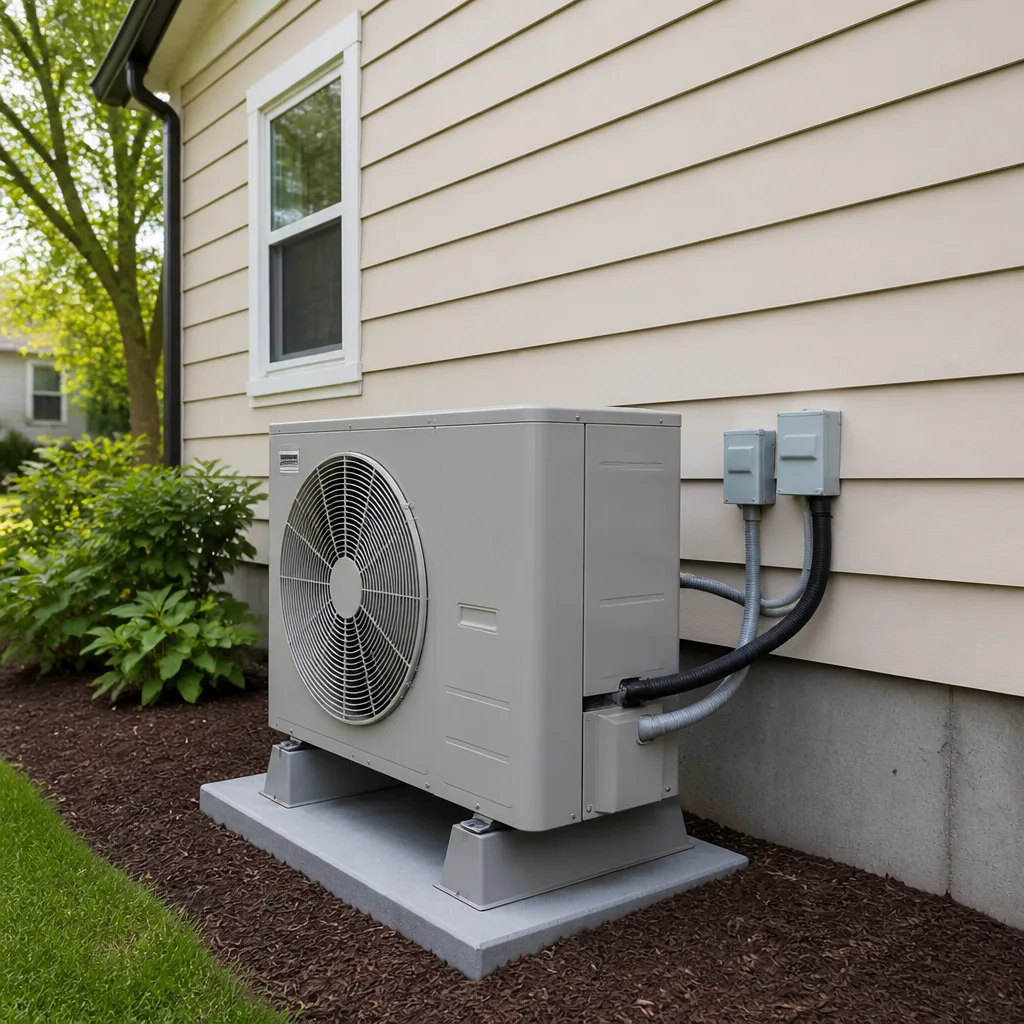 Heat pumps
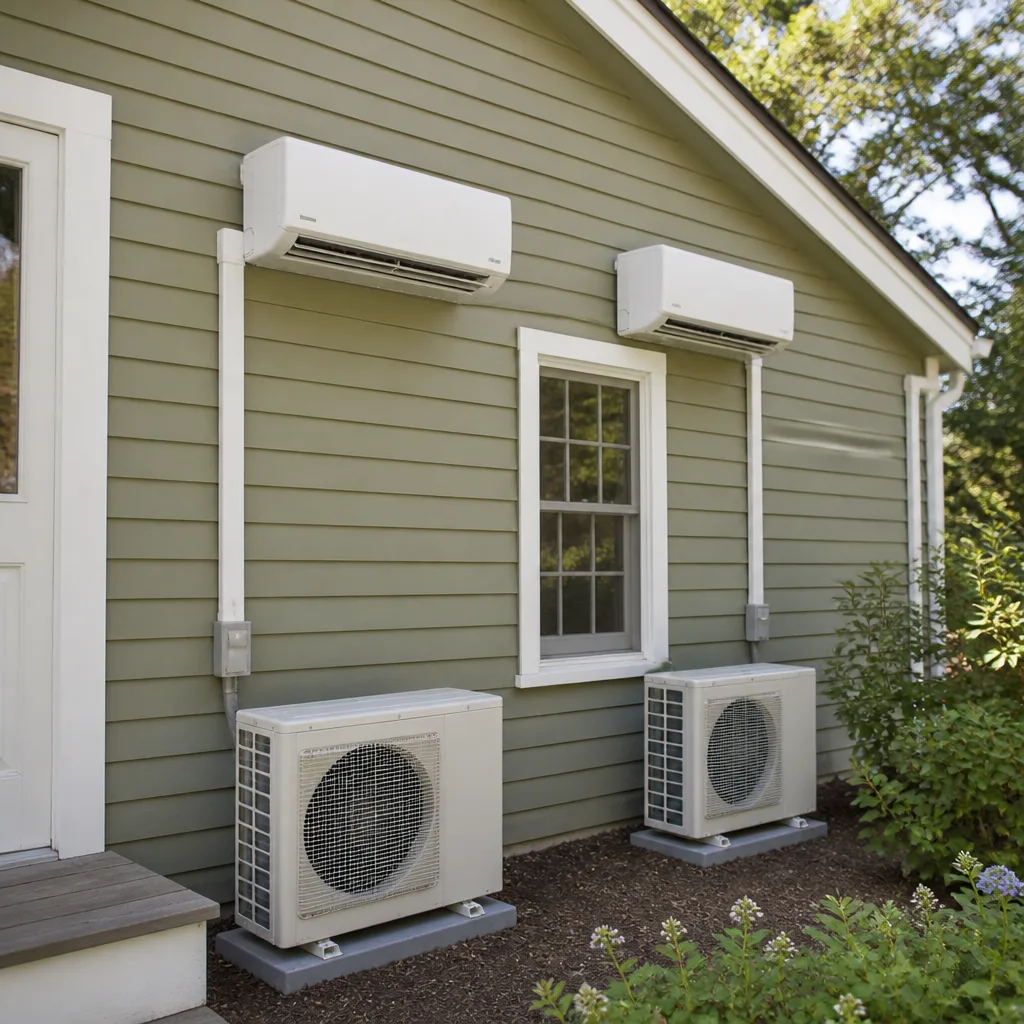 Ductless mini splits
 Carrier
 Trane
 Goodman
Seasonal tune-up and full diagnostic on your Carrier, Trane, or Goodman system - readings shown to you before any repair is proposed
Diagnosis first, numbers second - you approve the repair price before a single part goes in.
Get your free estimateHVAC Cost Breakdown: The Miramar Homeowner’s Reference for 2026
A $4,500 AC installation quote and a $7,200 quote for the same tonnage in Miramar can both be fair. Or both be wrong. The difference lives in line items most homeowners never know to ask about: whether the permit was pulled, what the line set is made of, which efficiency tier the equipment actually hits, and what happens to your call when the condenser fails. This guide prices what you’re actually buying, breaks a typical Miramar replacement into its component costs, and shows you how to read a quote the way a technician does.
Quick Answer
A standard AC replacement for a single-family home in Miramar typically runs $5,800 to $9,200 in 2026, with most homeowners landing between $6,500 and $8,000 for a straight swap running on existing ductwork. That range covers equipment, line set, electrical disconnect, permit, and labor, but the spread between the low and high end comes from tonnage, SEER2 tier, equipment brand, and how much of the existing system can be reused. Repairs typically run $180 to $850 depending on the component. A written estimate on your specific home is the only number that sets the final price.
Styles & brands we work with
- AC repair
- Furnace & heating
- Heat pumps
- Ductless mini splits
- Carrier
- Trane
- Goodman
Table of Contents
- What a Miramar Installation Actually Includes
- Why South Florida Installations Cost More
- SEER2 and FPL: Calculating Real Payback
- Repair Versus Replace: The 50% Rule in an 11-Month Climate
- What Drives Price Variation Between Miramar Contractors
- Furnace and Heating Costs in Miramar
- How to Read an Estimate Like a Technician
What a Miramar Installation Actually Includes
An honest quote for a Miramar AC replacement breaks the job into five cost buckets. When a contractor hands you a single lump sum, you can’t tell which of those buckets is being trimmed. Here’s how a typical replacement of a 3-ton split system in a Miramar home prices out in 2026:
- Equipment (condenser + air handler): $2,900 to $4,600. The single biggest line item, and where brand and SEER2 tier swing the number hardest. A base-tier unit and a high-efficiency unit can differ by $1,300 or more for the same tonnage.
- Copper line set: $350 to $700. Paired with the refrigerant lines if the old set is damaged or undersized. Reuse is possible but should be inspected, not assumed.
- Electrical disconnect and whip: $180 to $400. A dedicated disconnect at the condenser is required, and older panels sometimes need a breaker upgrade before the new unit can safely draw current.
- Permit (Broward County / City of Miramar): $250 to $550. Varies with project valuation. A permit-pulling contractor includes it; a contractor who “skips the paperwork” is passing a future problem to you.
- Labor, evacuation, refrigerant, and commissioning: $1,600 to $2,800. Includes the pump-down and vacuum pull, refrigerant charge, startup testing, and hauling off the old equipment.
Add those up and you land inside the $5,800 to $9,200 range. Where a specific Miramar home falls inside it depends on tonnage, whether the air handler is in the garage or attic, and whether the existing electrical and ductwork pass inspection. If the ductwork has to be rebuilt or the panel needs work, expect to move toward the top of the range. Our AC installation page walks through how a full replacement is scheduled and what we ask you to prepare.
Why South Florida Installations Cost More
National cost estimators often place an AC replacement $700 to $1,400 lower than what a Miramar homeowner actually pays. Three local factors sit behind that gap, and none of them are padding.
- Corrosion-resistant coating on the condenser coil. The constant humidity and year-round operating schedule here accelerate coil corrosion in a way that drier markets don’t see. A standard coil that would last a decade elsewhere can fail faster in South Florida. Many contractors spec a coated coil as standard, and that adds cost. It’s the difference between a coil that survives and one that leaks refrigerant in year six.
- Hurricane strapping and elevated mounting. Condensers here often sit on hurricane-rated pads or elevated stands. The tie-down and mounting hardware, plus the bracket work to anchor the unit, adds a small but real line item. Permitted installs account for this; unpermitted ones sometimes don’t.
- Refrigerant handling and evacuation discipline. Modern refrigerants moving through a proper evacuation and vacuum pull take time and equipment. A hurried install that skips the full vacuum pull saves the contractor an hour and costs you equipment life. That hour isn’t wasted time; it’s the difference between a system that runs clean and one that runs with moisture in the lines.
None of this is optional in Miramar. Whether you replace with a York, Daikin, or American Standard system, the installation quality around the equipment matters more than the badge on the cabinet. That’s why we service nine major brands rather than steering you toward one manufacturer’s inventory. We evaluate what fits your home and your budget, and we install what we recommend.
SEER2 and FPL: Calculating Real Payback
Here’s where a lot of homeowners get sold a high-efficiency system they can’t actually pay back. Manufacturer marketing compares SEER2 ratings as if electricity were priced the same everywhere. It isn’t. Your actual payback depends on your FPL rate, your home’s heat load, and how many months a year your system runs.
In South Florida, the system typically runs 10 to 11 months out of the year. That’s the key variable. A jump from a 14.3 SEER2 baseline unit to a 17 SEER2 unit means roughly 15 to 18% less energy consumed per ton of cooling. On a system running almost continuously, that adds up. On a system in a cooler climate running three months a year, it doesn’t. Here’s how to run the math yourself:
- Find your current monthly AC portion of your FPL bill. Cooling typically accounts for 40 to 60% of a South Florida summer bill.
- Multiply that number by the efficiency difference between the two units. A 14.3 to 17 SEER2 upgrade is roughly a 15% reduction.
- Take that monthly savings and multiply by 11, the number of cooling months here.
- Divide the equipment price difference between the two tiers by that annual savings. The result is your payback in years.
If the payback lands under seven years, the high-efficiency tier usually makes sense over the life of the equipment. If it lands beyond ten, the baseline tier is the honest choice. A Bryant or American Standard system at the base tier installed well will outperform a high-efficiency unit installed carelessly. Ask your contractor to run the math with your actual FPL bill in hand, not a manufacturer’s cost-savings chart. A straight answer here is worth more than a feature sheet.
Repair Versus Replace: The 50% Rule in an 11-Month Climate
The 50% rule says: if a repair costs more than half of a replacement, replace. In most climates that’s a useful loose guide. In Miramar it’s a guide that needs adjusting, because a system here runs 10 to 11 months a year and accumulates wear roughly twice as fast as a system in a mild four-season climate. That changes what a repair is actually buying you.
Here’s how to apply the rule in a Miramar home:
- Under $600 in repair, system under 8 years old: repair is usually the right call. The compressor and coil still have runway, and you’re buying another 2 to 4 cooling seasons.
- $600 to $1,200 in repair, system 8 to 12 years old: the edge case. If the failure is a single component and the rest of the system is intact, repair can still work. If you’re on your second major repair in three years, weigh replacement seriously.
- Over $1,200 in repair, or compressor failure on a system 10+ years old: replacement usually wins. The compressor alone can run $1,400 to $2,200 installed, and that’s money spent on equipment with limited remaining life.
- Any repair on a system 15+ years old: replace. The efficiency gap between a mid-2000s unit and a 2026 SEER2 unit, running 11 months a year, pays back faster than the repair math suggests.
When a system’s refrigerant charge is low, the diagnosis matters more than the fix. A small leak that’s topped off and not found will recur. A technician should locate the leak before recommending a charge, not after. Our furnace repair and cooling service work on the same principle: diagnose the actual failure, then tell you what the repair buys you in years, not just dollars.
What Drives Price Variation Between Miramar Contractors
Two Miramar contractors can quote the same 3-ton replacement at $6,200 and $8,400 and both be “right” in their own bookkeeping. The difference lives in four variables you can compare line for line.
- Permit pulling. A permit is a real line item. A contractor who quotes without pulling one is quoting a lower number and handing you an unpermitted install, which can complicate resale and future insurance inspection. Ask directly whether the permit is included.
- Equipment sourcing. Contractors buy through distribution networks and their pricing reflects relationships and volume. The same Daikin or Bryant model can land at different equipment cost from two contractors depending on how they source it. That’s fine; what you want is the model number spelled out so you can compare apples to apples.
- Warranty terms. Some quotes include a manufacturer’s standard parts warranty; some add a labor warranty of their own. If a quote doesn’t say what happens if the system fails in year two, ask. That piece of paper is worth money.
- Dispatch and service call policies. A quote that includes a low dispatch fee but leaves every repair visit marked up later isn’t cheaper in the long run. Look at the whole relationship, not the one number.
When we visit a Miramar home for an estimate, we put the model number, tonnage, SEER2 rating, permit status, and warranty on the written estimate. You compare the whole thing, not a lump sum. The written estimate sets the final price, and the estimate itself is free. If a contractor won’t give you that detail, that’s your answer about how the relationship will go.
Furnace and Heating Costs in Miramar
Miramar winters are mild, but heating systems still need service and sometimes replacement. Most homes here use a heat pump in the AC system rather than a separate furnace, and the number of true furnace installs is smaller than in northern markets. When a heating system does fail here, it’s usually a heat pump reversing valve, a defrost board, or a compressor issue, and repair typically runs $220 to $950 depending on the part.
For homes with a dedicated gas or electric furnace, repair costs in Miramar generally fall in these bands:
- Igniter or flame sensor replacement: $180 to $340.
- Blower motor replacement: $450 to $780.
- Heat exchanger inspection and replacement: $900 to $1,800. A cracked heat exchanger is a carbon monoxide concern, not a comfort concern, and should be treated as urgent.
- Full furnace replacement: $2,800 to $5,400 depending on fuel type and home size.
Because heating demand here is short, a furnace replacement is more often about safety and reliability than efficiency payback. If your furnace is 15 years old and has a heat exchanger concern, replacement is usually the right call even where the efficiency math would say otherwise in a colder climate. We handle furnace repair and replacement alongside AC work, which means you’re not calling two different contractors as the seasons shift. One contractor, one relationship, both halves of the system.
How to Read an Estimate Like a Technician
An HVAC estimate is a short document with a lot of information packed into it. Reading it well is how you separate a fair quote from a padded one or a bare-bones one that leaves you exposed. Here’s a checklist to run through before you sign:
- Model number, spelled out. Not just “3-ton high-efficiency unit.” You want the exact model so you can verify the SEER2 rating and the warranty terms independently.
- Tonnage matched to a load calculation. The right size isn’t the same size as the old unit. It’s the size that fits your home’s heat load. If the estimate doesn’t reference a load calculation, ask how the tonnage was chosen.
- Permit line item. Whether it’s included and who pulls it. This should be spelled out.
- Line set and disconnect. New or reused? Reuse is fine if the line set is inspected; ask how.
- What’s included in labor. Startup, refrigerant charge, evacuation, old equipment removal, and disposal should all be accounted for.
- Warranty terms. Parts and labor, duration, and who honors it if you move or the contractor changes hands.
- The final price statement. Does the estimate say the written price is what you pay, or does it leave room for “extras”?
If you’ve been shuttling between quotes for a week, take the estimate from a company that puts all seven of these on paper. That amount of detail is the sign of a contractor who plans to be around when you call in year three. If you’re ready to compare a written estimate for your Miramar home, see how we approach each step on our main Steadfast AC Repair page, and read more about our local service on the Miramar page.
Common Mistakes to Avoid
- Buying on tonnage alone. Two 3-ton systems can perform very differently depending on how they’re matched to the home. A load calculation before installation is non-negotiable in South Florida’s heat.
- Accepting a quote with no permit. An unpermitted install in Miramar can surface at resale or during a future insurance inspection. Ask the question directly and get it in writing.
- Comparing SEER2 numbers without running the math. Manufacturer cost-savings charts assume a climate you don’t live in. Run the payback with your FPL bill, not a brochure.
- Reusing an aging line set without inspection. If the refrigerant lines are pitted or hold moisture, they’ll cut into the new system’s life. Have them inspected, not assumed.
- Choosing on the lump sum. The lowest lump sum often hides a shorter warranty, no permit, or a smaller coil. Compare line items, not the final number.
- Topping off refrigerant without finding the leak. If the charge is low, the leak is somewhere. A charge that isn’t paired with a leak search will be back.
- Skipping the second repair assessment. If you’re on your second major repair in three years, replacement math starts to win. Consider it before the third breakdown happens in July.
See the difference
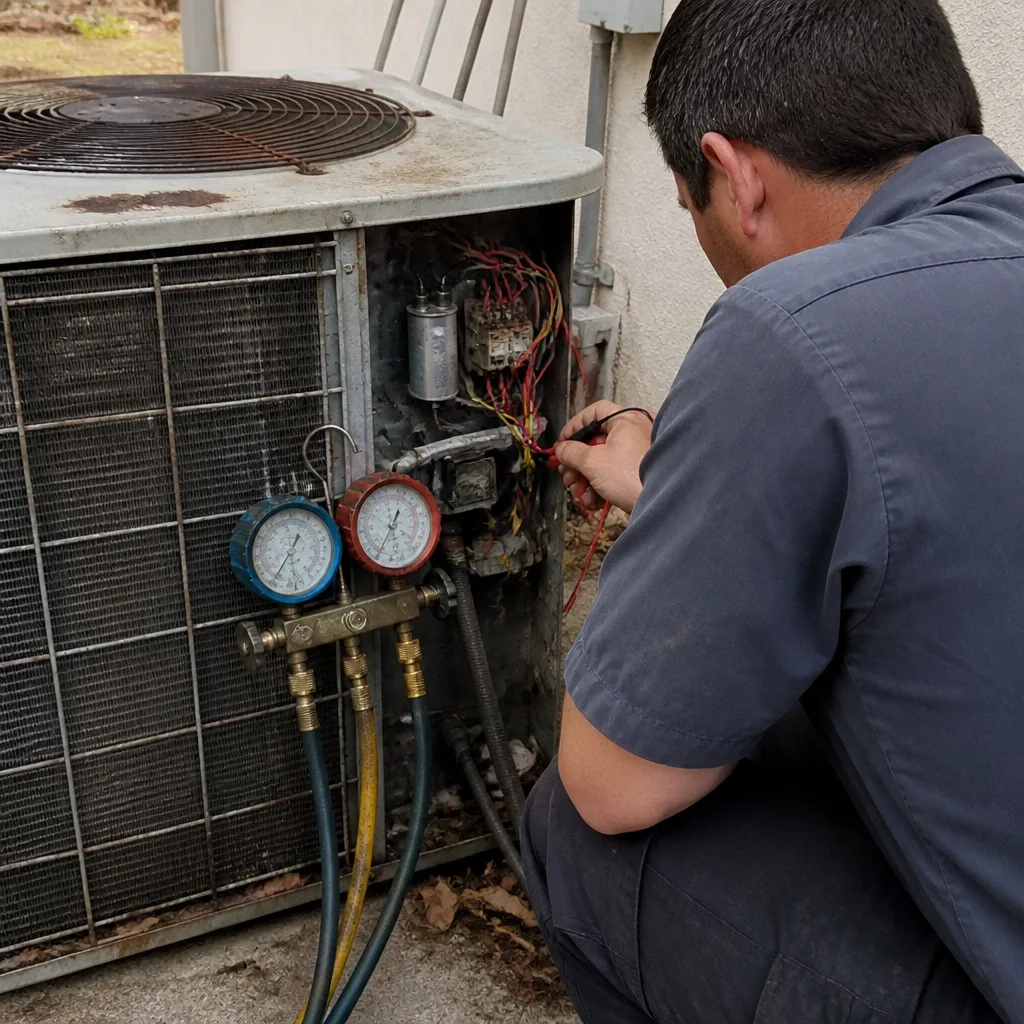 Before
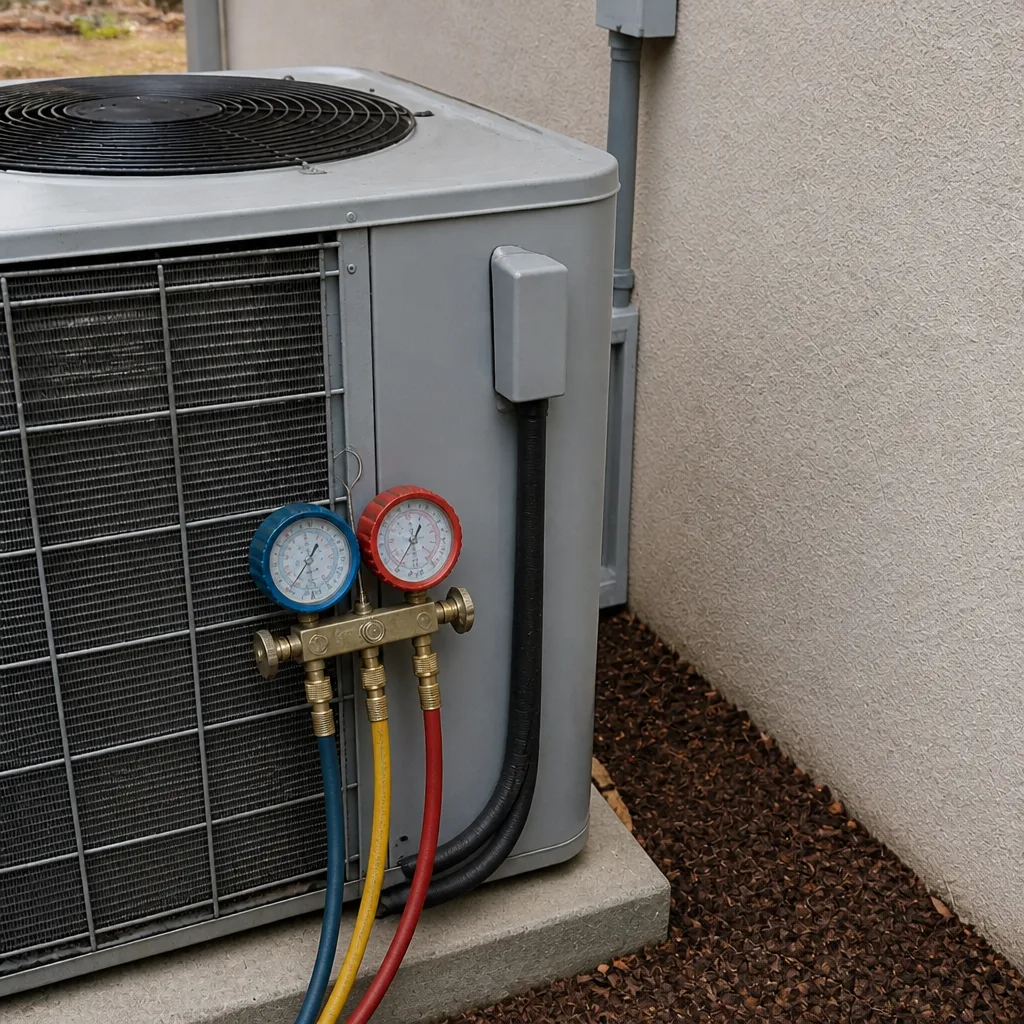 After
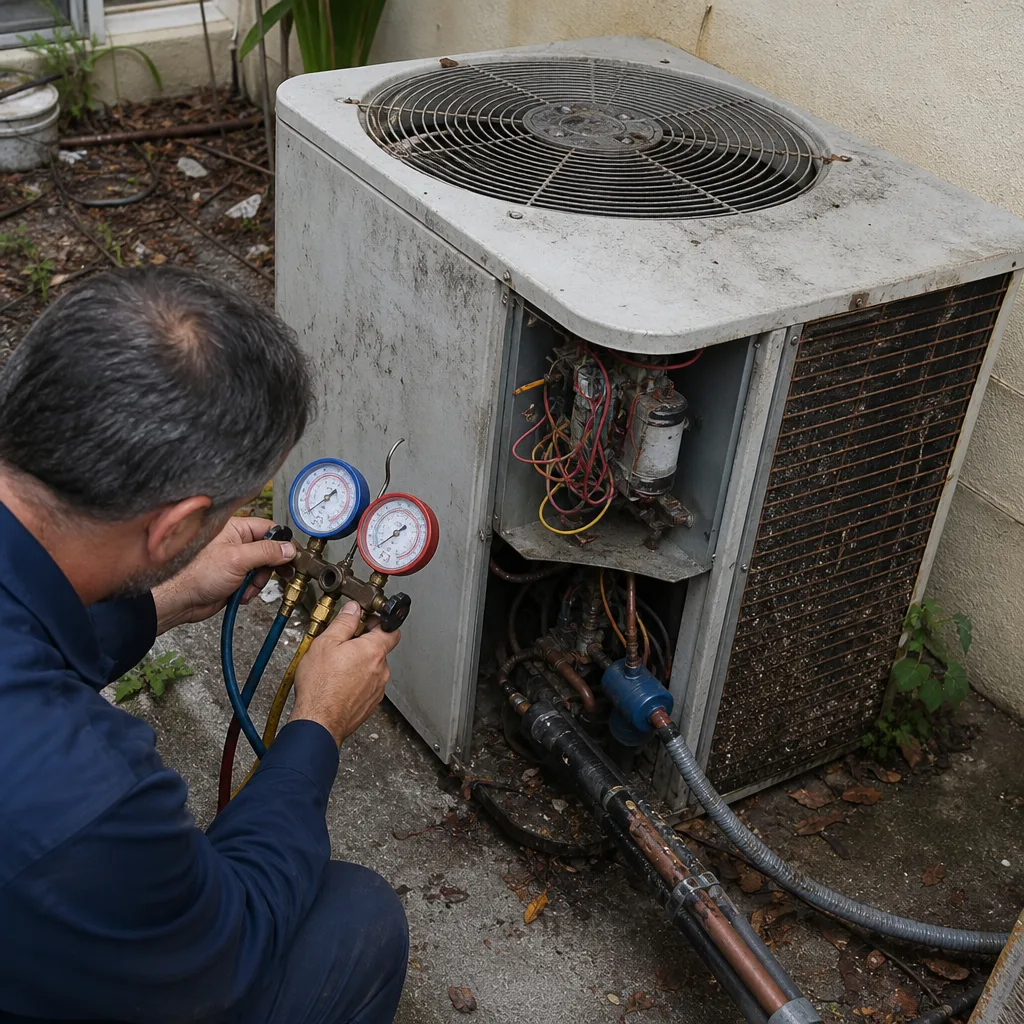 Before
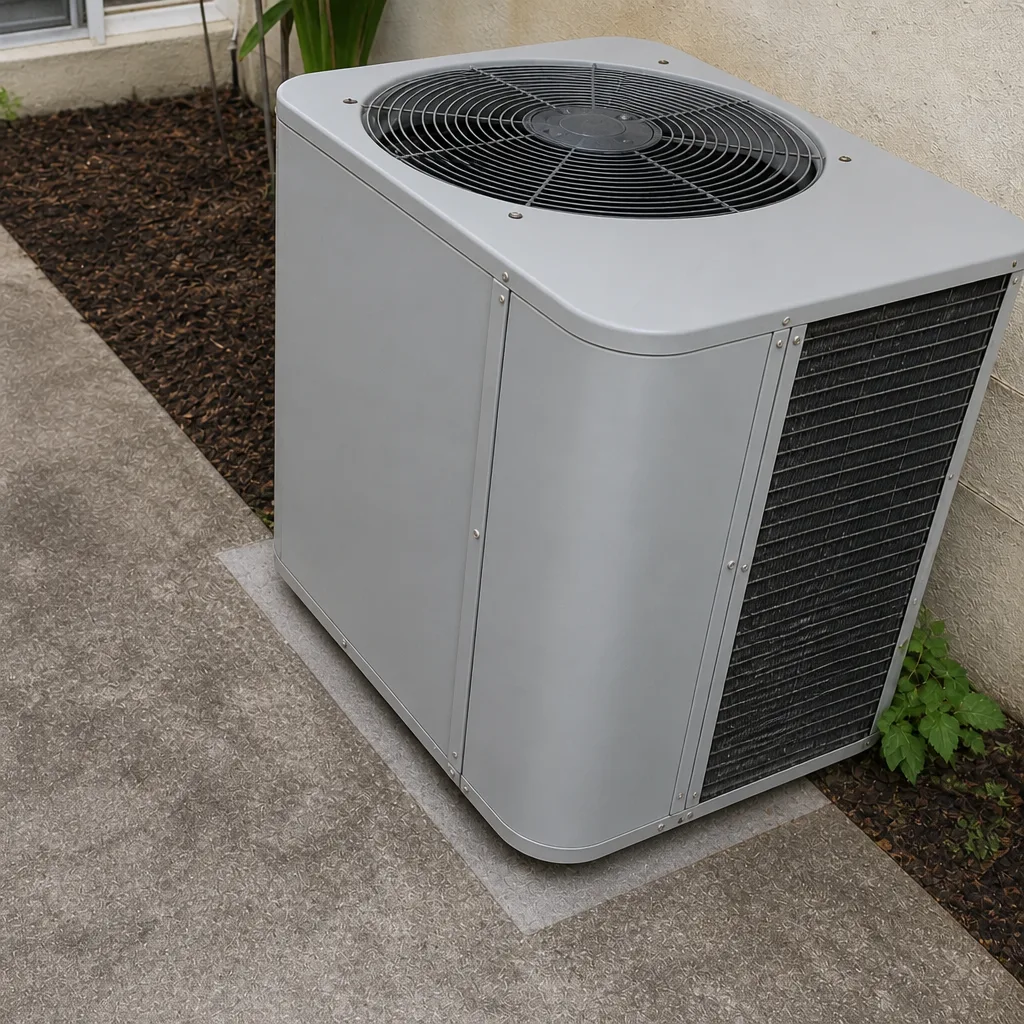 After
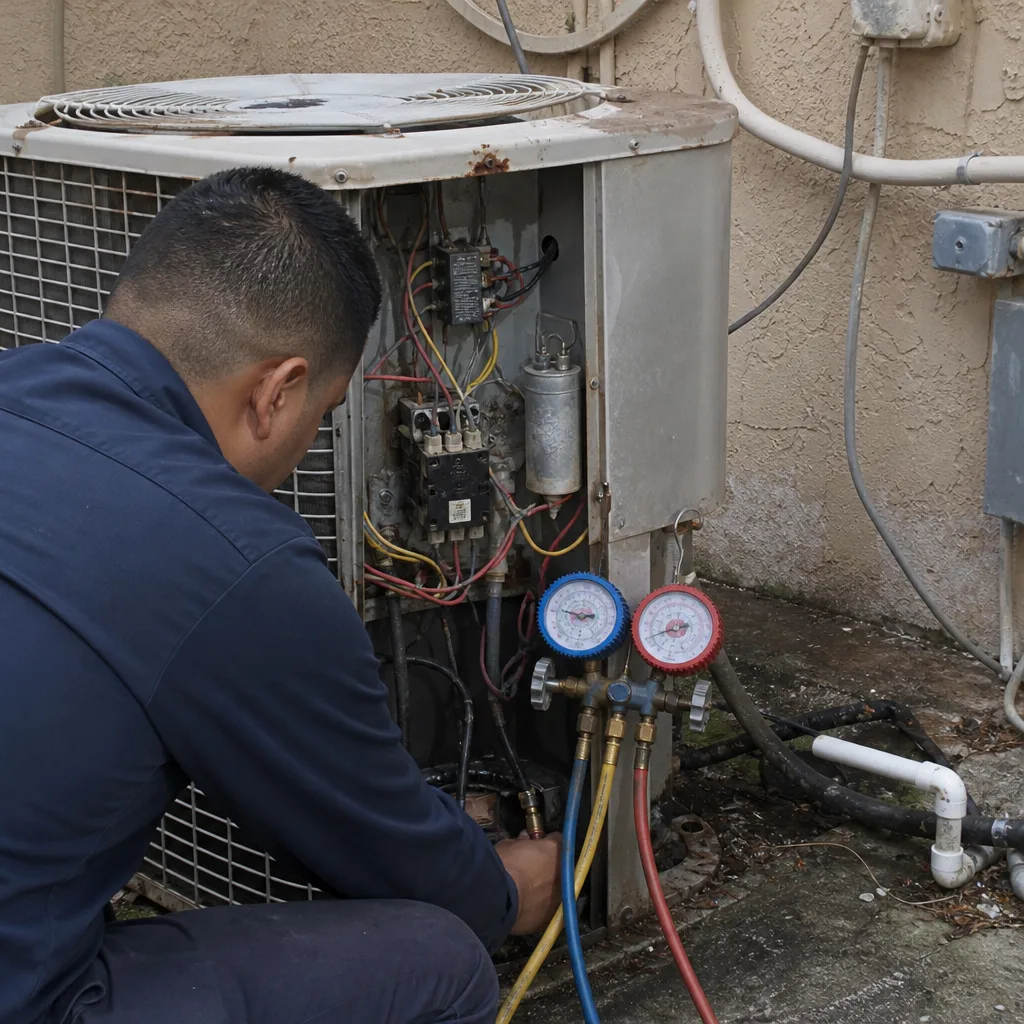 Before
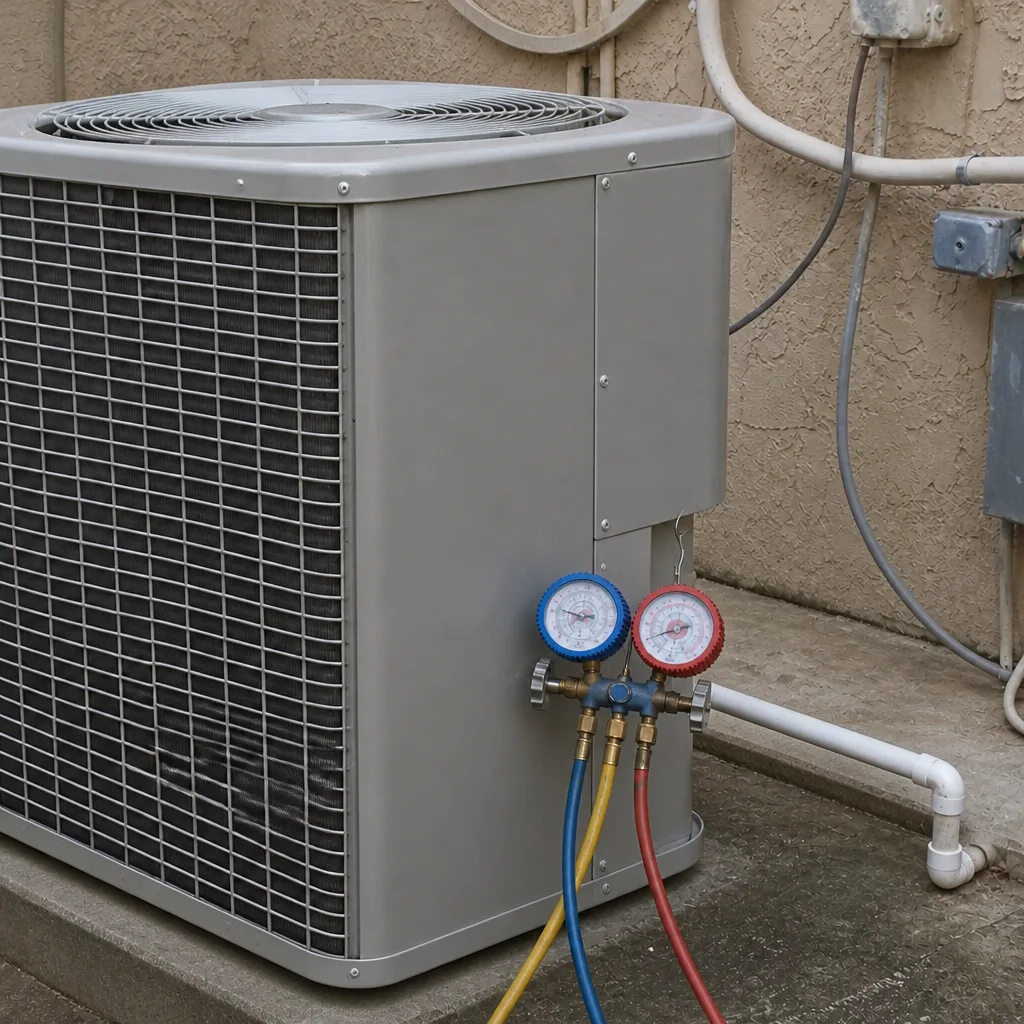 After
When to Call a Professional
Some HVAC issues are diagnoses, not emergencies. Others should be a phone call the same day. Call when you hear a grinding or screeching from the outdoor unit, when the system trips the breaker, when you smell burning at the air handler, or when cold air stops entirely on a hot Miramar afternoon. Call when the inside temperature is drifting more than 3 degrees above the thermostat setting with the system running. Call when refrigerant has to be added more than once: repeated charging is a leak, and a leak is a professional diagnosis. If you’re choosing between repairing and replacing and the system is past 12 years old, an estimate is warranted before the next failure. Steadfast AC Repair offers free estimates in Miramar, and our technicians have up to 12 years of experience across nine major manufacturers. Call (855) 627-2574 for a written estimate. We answer 24/7. Fast dispatch from 7am to 7pm, Sunday through Friday.
Frequently Asked Questions
A standard single-family AC replacement in Miramar typically runs $5,800 to $9,200 in 2026, with most homes landing between $6,500 and $8,000. The range reflects tonnage, SEER2 tier, equipment brand, and whether existing ductwork and electrical pass inspection. Call (855) 627-2574 for an exact quote; estimates are free.
Three local factors: corrosion-resistant condenser coils spec’d for South Florida humidity, hurricane-rated mounting and strapping, and the refrigerant handling discipline that a properly evacuated install requires. National estimators don’t account for these, which is why their numbers often run $700 to $1,400 below what a Miramar homeowner actually pays. A written estimate on your home sets the final price.
If a repair costs more than half a replacement, or the system is past 12 years old and needs a major component, replacement usually wins. In Miramar’s year-round climate, a system accumulates wear faster than in milder markets, so the age threshold matters more than in colder regions. Call (855) 627-2574 and we’ll give you a straight assessment.
Yes. A like-for-like AC replacement in Miramar requires a permit through the City of Miramar or Broward County, depending on jurisdiction, and the permit cost typically runs $250 to $550 based on project valuation. A contractor who quotes without pulling one is handing you an unpermitted install. Ask before you sign.
We service nine of the most widely installed HVAC brands: Carrier, Trane, Lennox, Goodman, Rheem, York, Daikin, Bryant, and American Standard. Because we don’t hold an exclusive relationship with any manufacturer, our equipment recommendations are based on what fits your home. Call (855) 627-2574 for a service visit or an estimate.
Most AC repairs in Miramar run $180 to $850 depending on the component. A capacitor replacement sits near the low end, a blower motor replacement in the middle, and compressor work at the high end. When a repair climbs past $1,200 on a system over 10 years old, ask for a replacement estimate before committing. Call (855) 627-2574 to schedule a diagnostic.
The Bottom Line
An HVAC quote is a document, not a number. In Miramar, the fair range for a replacement is $5,800 to $9,200, and the difference between the low end and the high end is which line items are included and which are quietly left off. Line sets, permits, corrosion-resistant coils, hurricane mounting, and evacuation discipline all cost real money and all affect how long the system lasts. Read your estimate line by line, run the SEER2 payback against your FPL bill, and be skeptical of any quote that leaves out the model number. The price you can trust is the one set by a written estimate you can read.
Whether you’re facing a failure this week or planning a replacement this year, the next step is the same: get a written estimate on your specific home. Call (855) 627-2574. We answer 24/7. Fast dispatch from 7am to 7pm, Sunday through Friday.
Written by the team at Steadfast AC Repair.