
Last updated November 16, 2026
 AC repair
 Furnace & heating
 Heat pumps
 Ductless mini splits
 Carrier
 Trane
 Goodman
Seasonal tune-up and full diagnostic on your Carrier, Trane, or Goodman system - readings shown to you before any repair is proposed
Diagnosis first, numbers second - you approve the repair price before a single part goes in.
Get your free estimateDIY vs Professional HVAC: The Miramar Homeowner’s Decision Guide
Most HVAC DIY advice you’ll find online is written as if the only question is whether you’re handy enough. In Miramar, that’s the wrong question. Florida’s permit rules and federal refrigerant law make a good share of the repairs in those popular videos something a homeowner can’t legally do here, no matter how confident they feel with a screwdriver. This guide sorts HVAC work into what’s genuinely safe to handle yourself, what’s risky but permitted, and what’s off-limits without a license. You’ll also see where DIY actually saves real money and where a small mistake turns into a mold problem months later.
Quick Answer
In Miramar, filter changes, thermostat swaps, condensate line flushing and gentle condenser coil rinsing are safe homeowner tasks that save real money. Refrigerant work, electrical repairs inside the system, gas furnace work, and most duct modifications are legally or technically off-limits without proper licensing and certification, and getting them wrong can void manufacturer warranties and put an insurance claim at risk. Everything in between comes down to your comfort level, the age of the equipment, and how much a botched attempt would cost to correct.
Styles & brands we work with
- AC repair
- Furnace & heating
- Heat pumps
- Ductless mini splits
- Carrier
- Trane
- Goodman
Table of Contents
- The Legal Fence: What Miramar Homeowners Can’t Touch
- The Three-Tier Task List: Safe, Risky, Off-Limits
- How DIY Work Can Void Your Warranty and Cloud an Insurance Claim
- Where DIY Genuinely Saves Money in Miramar
- Why Ductwork Is Different in South Florida’s Humidity
- The Cost-Comparison Framework: What You Save vs What a Fix Costs
- Common Mistakes to Avoid
- When to Call a Professional
- Frequently Asked Questions
The Legal Fence: What Miramar Homeowners Can’t Touch
Here’s the part the DIY videos skip. In the United States, handling refrigerant without an EPA Section 608 certification is a federal violation, not a licensing gray area. That single rule removes a large share of the tasks featured in popular HVAC repair content from the homeowner’s list entirely. Adding refrigerant, recovering it, and working with the sealed refrigerant circuit all require that certification, and no amount of YouTube confidence changes it.
Layered on top of the federal rule is Florida’s contractor licensing structure. Most substantial HVAC work in Miramar, including system replacement and significant modifications, requires a permit pulled by a licensed contractor. When a permit is required, the work generally must be done by a licensed professional, and the local building department is the authority on what applies to your specific project. If you’re unsure whether your job needs one, ask before you start. Undoing unpermitted work later costs far more than doing it right the first time.
Gas furnace work sits in a similar category. Any task involving gas lines, the gas valve, or combustion components isn’t a homeowner project, full stop. Carbon monoxide is a genuine safety risk, not a theoretical one, and we recommend a trained professional for anything touching that side of the system.
Electrical work inside the air handler or condenser presents its own hazards. Capacitors hold a charge after power is cut, and contactor and wiring repairs carry real shock and fire risk. A licensed technician knows how to discharge and isolate components safely. A homeowner with a multimeter and a tutorial doesn’t.
Where does that leave the do-it-yourselfer in Miramar? Plenty of useful work remains. It’s just not the work in the videos that get the most views.
The Three-Tier Task List: Safe, Risky, Off-Limits
The clearest way to think about HVAC DIY is a three-tier sort. Each tier carries different risk, different legal exposure, and a different answer on whether it’s worth your Saturday.
Tier 1: Safe DIY (Homeowner-Friendly)
- Replacing air filters every one to three months, or more often during heavy-use stretches. Cheap, quick, and the single highest-value habit for system health.
- Flushing the condensate drain line with a cup of vinegar or warm water to keep it clear. A clogged line is one of the most common causes of water damage around an air handler in South Florida.
- Swapping a thermostat when you’re replacing like for like and can follow the wiring diagram carefully. Label every wire before you disconnect it.
- Gentle condenser coil rinsing with a garden hose from the inside out, with the power off at the breaker. Skip the pressure washer.
- Keeping the outdoor unit clear of leaves, grass clippings, and stored items. Two feet of clearance all around is a reasonable rule of thumb.
Tier 2: DIY at Your Own Risk (Technically Possible, Real Downside)
- Replacing a run capacitor or contactor. The parts are cheap and the videos are everywhere. The shock risk isn’t. If you attempt it, kill power at the breaker and verify with a meter before touching anything.
- Cleaning the evaporator coil. Doable in some setups, but easy to bend fins or leave moisture in places it shouldn’t sit.
- Minor duct tape and mastic repairs at accessible joints. Small seal-up jobs are fine. Reconfiguring runs is a different story, covered below.
- Straightening bent condenser fins with a comb. Cosmetic, low-risk, and improves airflow a little.
Tier 3: Legally or Technically Off-Limits for Unlicensed Homeowners
- Any refrigerant handling. Federal EPA 608 certification is required. This includes adding, recovering, and diagnosing sealed-system leaks.
- Gas line work, gas valve service, and combustion component repairs. Safety risk plus code requirements.
- Full system replacement or major component change-outs that require a permit in Miramar. This is where licensed contractor rules apply.
- Compressor replacement and sealed-system repairs. Refrigerant circuit work plus permit considerations.
- Duct system redesign or substantial modifications. Covered in its own section, because the humid climate makes this its own category of risk.
- Electrical panel or circuit changes feeding the equipment. Licensed electrician territory.
Sort your own list into these tiers before you pick up a tool. If a task lands in Tier 3, the question isn’t whether you can do it. It’s whether doing it could cost you more than hiring a professional would have.
How DIY Work Can Void Your Warranty and Cloud an Insurance Claim
Manufacturer warranties on equipment from Carrier, Trane, Lennox, American Standard and the other major brands typically include conditions that the equipment be installed and serviced according to manufacturer specifications, often by licensed professionals. When a homeowner performs work that falls outside those conditions, or when an unlicensed repair causes a failure, the manufacturer can deny a claim on the failed part. The equipment might still be under its parts warranty on paper, but that warranty doesn’t help if the claim gets denied.
Insurance is the second layer. Most Florida homeowner policies include language about damage caused by faulty workmanship, unpermitted work, or work that didn’t meet code. If a poorly installed or improperly modified system causes water damage to ceilings, walls, or flooring, the claim can be contested. The specific policy language to review in your own documents usually lives in the exclusions section, under terms like “faulty workmanship,” “improper installation,” “ordinance or law,” and “water damage.” Pull your policy and read those clauses before you tackle anything beyond the Tier 1 tasks.
The third layer is resale. Unpermitted HVAC work can surface during a home inspection or a title search, and it can delay or complicate a sale. In Miramar, where a lot of housing stock changes hands with buyers who know what to look for, that’s a real cost of doing it yourself.
None of this is meant to scare you out of the safe stuff. It’s meant to be clear about which tasks carry consequences that go beyond the equipment. If you want a straight read on whether a repair will affect your coverage, Steadfast AC Repair can walk you through what’s what. Where the answer is “call a professional,” we’re happy to say so.
Where DIY Genuinely Saves Money in Miramar
The do-it-yourself projects worth doing in Miramar are the ones that prevent problems rather than fix broken parts. They’re repeatable, they’re low-risk, and they compound over time. Here’s where the money actually goes back into your pocket.
- Filter replacement. A fresh filter every one to three months is the cheapest way to protect your blower motor and keep airflow strong. In Miramar’s long cooling season, systems run hard, and a dirty filter makes them work harder. Changing it costs a few dollars and takes five minutes.
- Condensate line flushing. A cup of white vinegar down the drain line once a month keeps algae and sludge from building up. A clogged line overflows, and the resulting water damage around an interior air handler runs into the hundreds or more to dry out and repair. The vinegar is essentially free.
- Thermostat swap. If you’re upgrading to a programmable or smart thermostat and you’re replacing like for like, a careful swap can cut energy use once you set a sensible schedule. Label the wires, photograph the old connections, and follow the manufacturer’s wiring diagram.
- Condenser coil rinsing. With the breaker off, a gentle hose rinse from the inside out clears dust and debris that reduce efficiency. Skip the pressure washer, which can bend fins and force water where it shouldn’t go.
- Clearing the outdoor unit. Leaves, grass clippings, and stored items around the condenser restrict airflow. Two feet of clearance all around is a reasonable goal and costs nothing.
Every one of these tasks carries no meaningful legal or technical risk for a homeowner. They also prevent the failures that turn into the expensive calls. The money you save isn’t in avoiding a repair bill, it’s in avoiding the repair entirely.
If you’d like an honest assessment of what your system needs beyond the basics, furnace repair and heating service are the kind of work we handle year round, and we’ll always tell you plainly when something is a homeowner job and when it isn’t.
Why Ductwork Is Different in South Florida’s Humidity
Ductwork looks like plumbing for air. It isn’t. In Miramar’s humid climate, ductwork is a moisture-management system as much as an airflow system, and that’s where amateur installations go wrong in ways that don’t show up for months.
Air conditioning doesn’t just cool the air, it removes moisture from it. When ducts are correctly sized, sealed, and insulated, conditioned air moves through them and returns to the house without picking up moisture along the way. When ducts are undersized, poorly sealed at joints, or run through unconditioned space without proper insulation, the air inside them cools below its dew point and condensation forms on the duct surfaces. Warm, humid attic air leaking into a cold duct run does the same thing. The result is standing moisture inside insulation and on duct board, in a dark, warm environment with a continuous food supply of dust.
That’s the recipe for mold growth, and the mold typically doesn’t appear in the duct itself. It appears on the ceiling below, or in the attic insulation, or around the vents a homeowner was sure were installed correctly. By the time the smell and the staining show up, the problem has been growing for weeks or longer.
Professional duct work isn’t just about getting the airflow right. It’s about sealing, insulation and sizing choices that keep condensation from forming in the first place. That requires an understanding of how a duct system behaves in this specific climate, not just how it looks in a generic video. In our experience, this is the category where a “completed” DIY job is most often quietly failing behind the drywall.
If you’re facing duct decisions and want a straight read on your system, AC installation work is where we see the widest range of outcomes, and it’s where getting the duct design right the first time pays back for the life of the system.
The Cost-Comparison Framework: What You Save vs What a Fix Costs
The honest way to evaluate an HVAC DIY job is to compare three numbers: the cost of doing it yourself, the cost of hiring it done, and the cost of correcting it if you get it wrong. The third number is the one that gets skipped, and it’s the one that decides most of these questions.
- The safe tasks (Tier 1): Your cost is minimal. The professional cost is modest but adds up if you’re paying for every filter change and hose rinse. The cost of a correction is effectively zero, because these tasks either work or don’t matter. DIY wins on the math every time.
- The risky tasks (Tier 2): Your cost is the part plus a few hours. The professional cost covers travel, diagnosis and the fix. The cost of a correction can include the part you bought, the damage you caused, and a professional visit to fix it. If you’re comfortable with a meter and a breaker panel, some of these break even. If you aren’t, they don’t.
- The off-limits tasks (Tier 3): Your cost isn’t just the part. It’s the federal violation, the permit problem, the voided warranty claim, or the correction needed to bring the system into compliance. The professional cost is the only number in this row that stays fixed. DIY doesn’t have a plausible positive outcome, only a range of negative ones.
Run any HVAC task in your Miramar home through that framework before you decide. Filter changes and condensate flushes are easy wins. Refrigerant work and duct redesigns are the opposite. If a task lands in Tier 3, a free estimate from a licensed professional is the cheapest first step you can take. We offer those throughout Miramar, and we’ll tell you straight whether the repair is even worth doing versus a replacement path.
Common Mistakes to Avoid
- Chasing YouTube repairs into Tier 3 territory. Watching a video on adding refrigerant doesn’t change the federal rule. If the task involves the sealed refrigerant circuit, it’s not a homeowner job.
- Skipping the power verification. Turning off the breaker is not the same as confirming the power is off. Capacitors hold a charge and can shock you minutes after the disconnect.
- Using a pressure washer on the condenser coil. It’s the fastest way to bend fins, force water where it doesn’t belong, and reduce efficiency. A garden hose is the right tool.
- Sealing ducts with tape alone in a humid climate. Standard duct tape fails in attic conditions. Mastic and proper mechanical fastening are what hold up in Miramar’s heat and humidity.
- Changing duct runs without addressing insulation. A new run through unconditioned space without proper insulation will sweat in South Florida and create a moisture problem that shows up months later.
- Assuming the warranty covers whatever happens next. Read the manufacturer conditions for your equipment, whether it’s Carrier, Trane, Lennox, American Standard or another brand, before assuming a DIY repair won’t affect a future claim.
- Ignoring the condensate line. It’s the cheapest maintenance there is and the most common cause of water damage around an interior air handler. Flush it monthly.
When to Call a Professional
Call a professional when the task is in Tier 3, when the task is in Tier 2 and you aren’t confident with electrical components, or when the DIY attempt has already gone sideways. Also call when a system is doing something you can’t explain: short cycling, ice on the indoor coil, water around the air handler that isn’t a condensate clog, or a burning smell at the outdoor unit. Those aren’t diagnostic puzzles for a homeowner to solve with a phone camera. They’re the situations where a trained technician can save you money by finding the actual cause instead of replacing parts.
Steadfast AC Repair offers free estimates in Miramar. We service equipment from nine major brands, including Carrier, Trane, Lennox, American Standard, Goodman, Rheem, York, Daikin, and Bryant, so if the repair is worth doing, we can handle the diagnosis and the fix. Call (855) 627-2574. We answer 24/7, and fast dispatch runs from 7am to 7pm.
Frequently Asked Questions
No. Adding or recovering refrigerant requires EPA Section 608 certification, and doing it without that certification is a federal violation, not a licensing gray area. This is why DIY refrigerant work is the clearest Tier 3 task on the list. Call (855) 627-2574 for a free estimate from a licensed professional.
It can, if the work falls outside the manufacturer’s service conditions or causes the failure being claimed. Most equipment warranties on Carrier, Trane, Lennox, American Standard and similar brands specify installation and service conditions, and unlicensed work that leads to a failure can result in a denied claim. Review your warranty document and call us if you’re unsure whether a repair has warranty implications.
Filter replacement, condensate line flushing, thermostat swaps, gentle condenser coil rinsing with the power off, and keeping the outdoor unit clear of debris. These are the tasks that genuinely save money without risk. For anything beyond that, call (855) 627-2574 for a free estimate.
Because moisture, not airflow, is where duct mistakes turn into real damage. Condensation forms inside poorly sealed or improperly insulated ducts in South Florida’s humidity, and the mold that grows from that moisture typically appears on ceilings and in attic insulation weeks after the ductwork looked finished. If you’re planning duct modifications, talk to a professional first.
Pricing is per job by a written estimate, which is why we offer free estimates rather than quoting over the phone. The honest comparison isn’t the repair cost versus your DIY cost, it’s the repair cost versus the size of the DIY correction if the task goes wrong. For Tier 3 tasks, the professional cost is the only number that stays fixed. Call (855) 627-2574 to schedule an estimate.
We answer 24/7 and run fast dispatch from 7am to 7pm, so the fastest first step is a call. A trained technician can diagnose the issue on site, and we’ll tell you straight whether the fix is worth doing versus a replacement path for the system. We work on your brand, including Carrier, Trane, Lennox, American Standard, and the other major manufacturers.
The Bottom Line
The DIY-versus-professional decision in HVAC isn’t actually about skill. In Miramar, it’s about which tasks carry legal, safety, and financial exposure that no amount of YouTube confidence erases. Filter changes, condensate line flushes, thermostat swaps, and gentle coil rinses are genuinely yours to do, and they save real money when done consistently. Refrigerant work, gas furnace work, electrical repairs inside the system, and most duct modifications are off-limits without proper licensing and certification. Everything else lives in the middle, where a careful homeowner can save on the small stuff and a botched attempt can cost far more than a professional visit. Our advice is the same whether you hire us or someone else: know which tier you’re in before you start, then call (855) 627-2574 for a free estimate if the job belongs in a professional’s hands.
Written by the team at Steadfast AC Repair.
See the difference
 Before
 After
 Before
 After
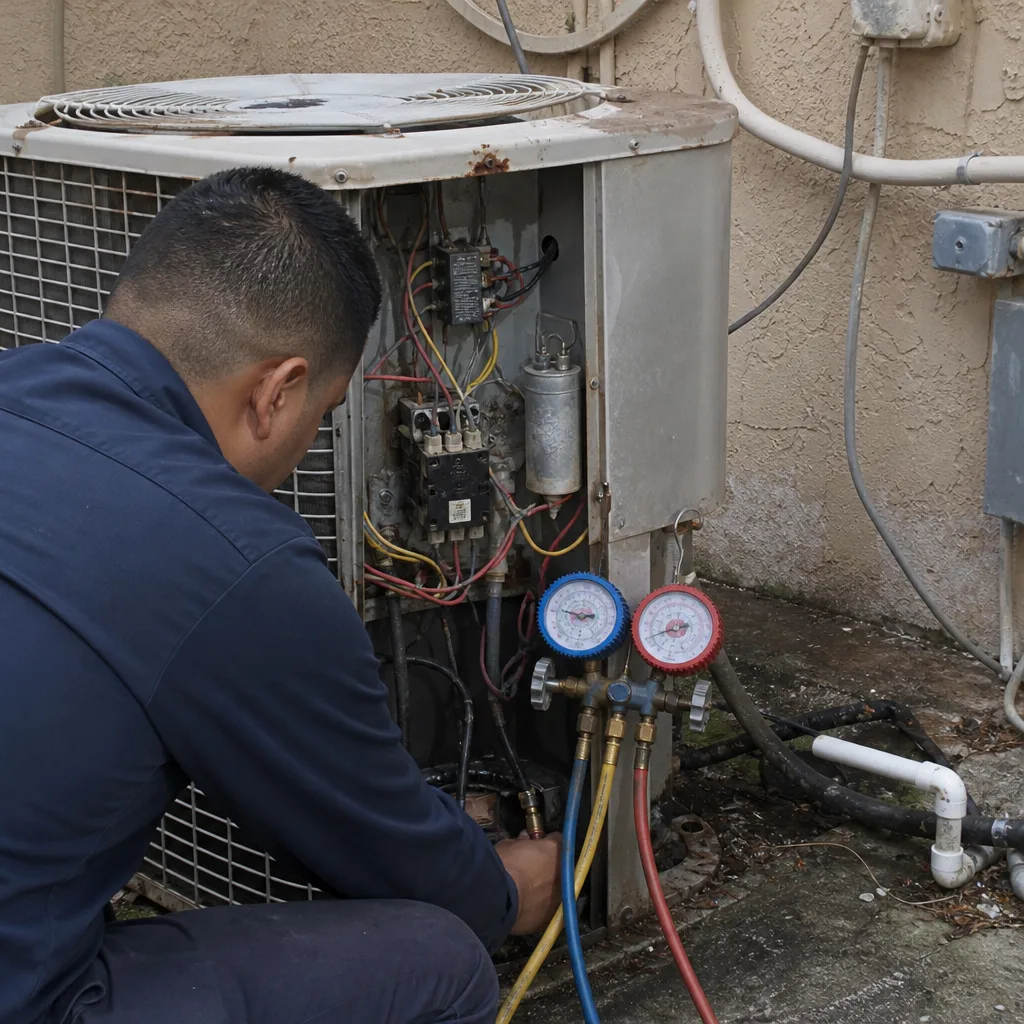 Before
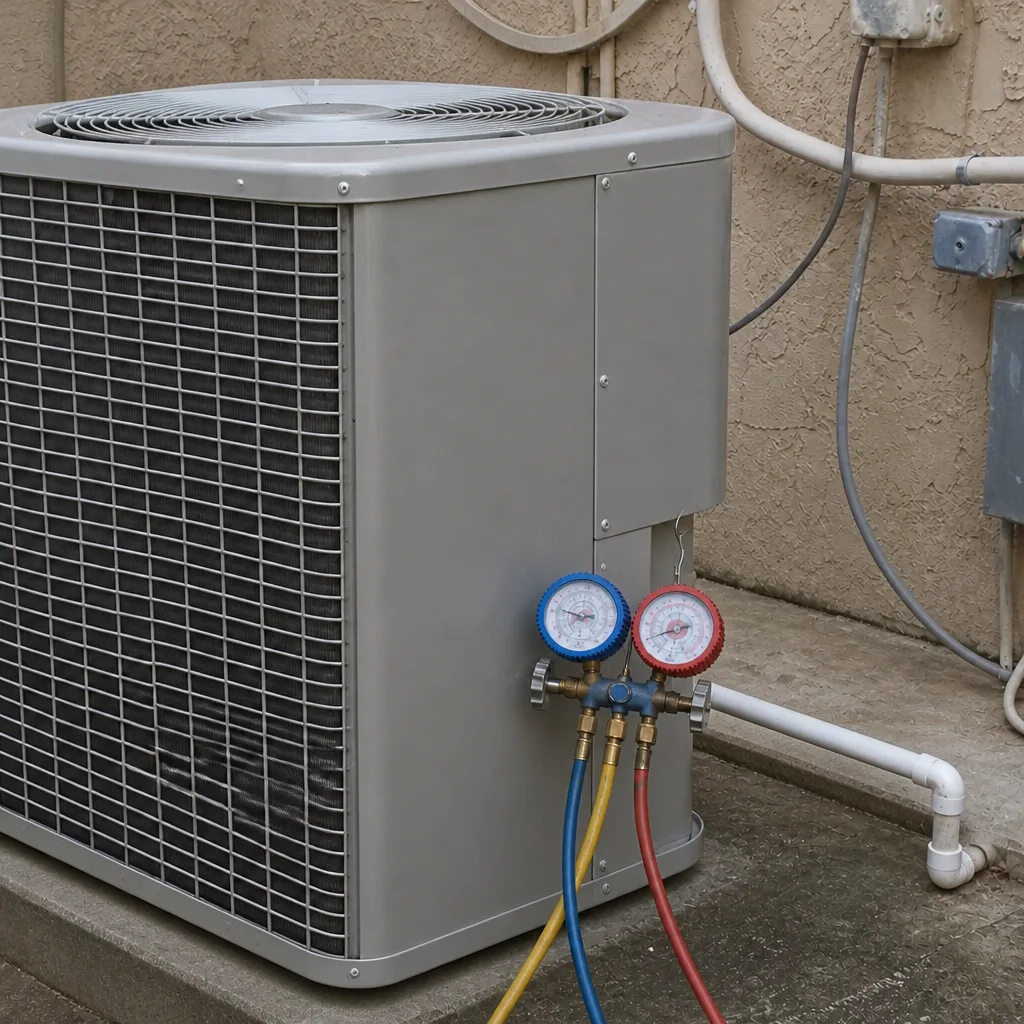 After