
Last updated November 16, 2026
 AC repair
 Furnace & heating
 Heat pumps
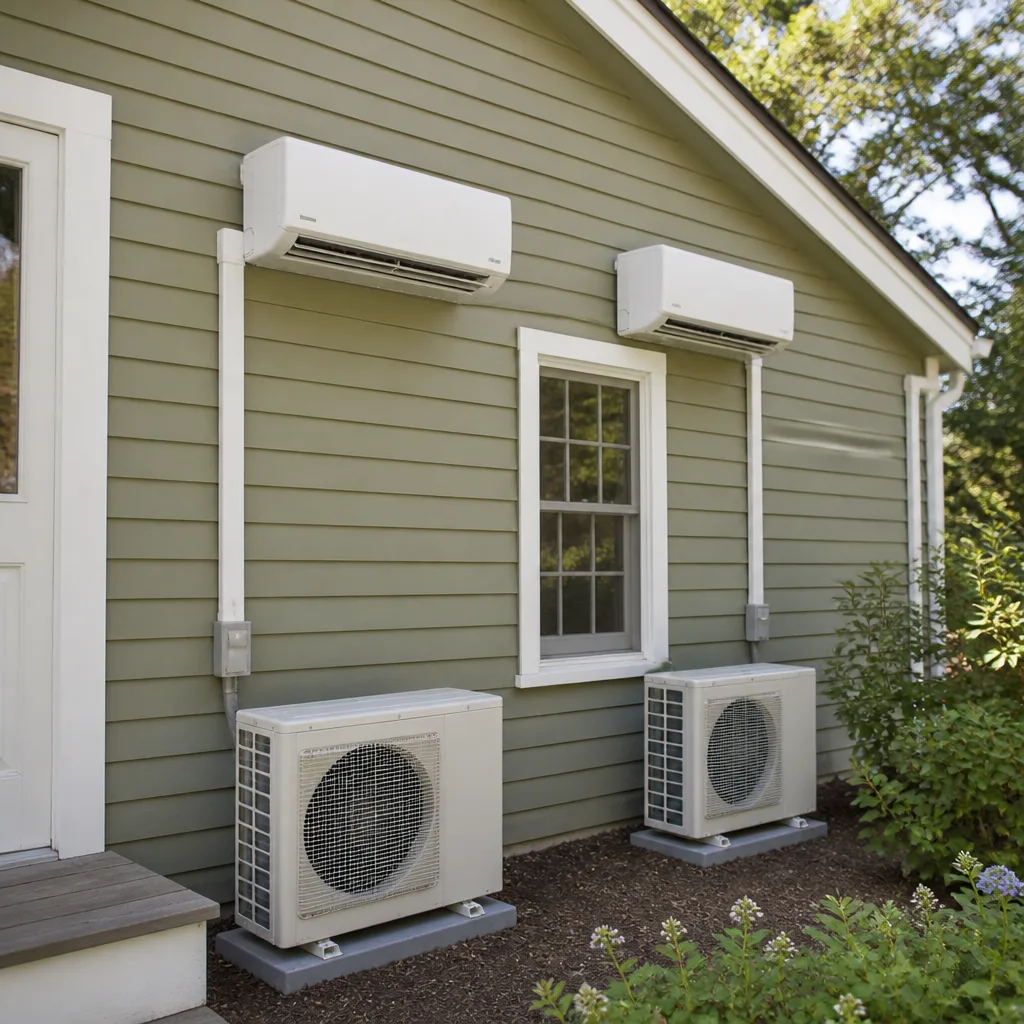 Ductless mini splits
 Carrier
 Trane
 Goodman
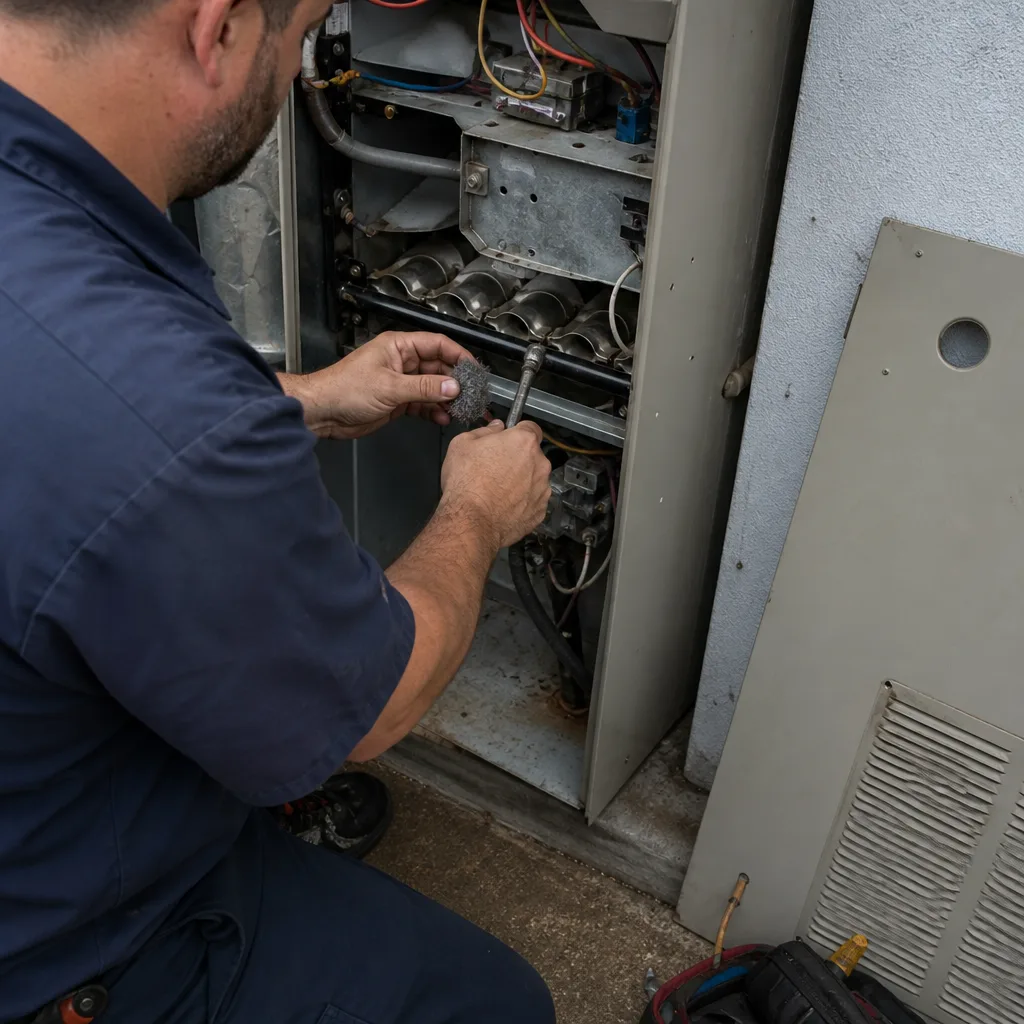
Seasonal tune-up and full diagnostic on your Carrier, Trane, or Goodman system - readings shown to you before any repair is proposed
Diagnosis first, numbers second - you approve the repair price before a single part goes in.
Get your free estimateHVAC Emergency Preparedness Guide for Miramar Homes
Most Miramar homeowners think of their air conditioner as either working or broken. In practice, it gives warnings for days or weeks before it quits. The misconception is that a breakdown is sudden and unavoidable. Nearly every no-cooling call we see during a July heat advisory traces back to a small issue that was ignored through the spring: a clogged drain line, a dirty condenser coil, a weak capacitor. During a Miramar heat event, calls to HVAC contractors climb sharply within about 48 hours of temperatures climbing past 95°F, and homeowners who wait until the system shuts down end up competing with hundreds of neighbors for the same limited technicians. This guide covers how to prepare before the season, what to do in the first 30 minutes of a failure, how to protect your system through a hurricane, and how to line up a contractor so you’re not an unknown caller at the back of a long queue.
Quick Answer
Preparing for an HVAC emergency in Miramar means three things: getting your system inspected and cleaned before the heat season, keeping a small kit of homeowner-safe spares and a written post-storm startup routine on hand, and establishing a relationship with a service company before you need one. The goal is to know whether a failure is a genuine health emergency or an urgent inconvenience, and to have a contractor who already knows your equipment. Preparation is what turns a crisis into a same-day repair.
Styles & brands we work with
- AC repair
- Furnace & heating
- Heat pumps
- Ductless mini splits
- Carrier
- Trane
- Goodman
Table of Contents
- Why Miramar HVAC Emergencies Follow a Pattern
- Is It a True Emergency or an Urgent Inconvenience?
- What to Do in the First 30 Minutes of a Heat-Season Failure
- The Pre-Season Emergency Kit You Can Stock Yourself
- HVAC Hurricane Protocol: Before, During, and After
- How to Set Up a Service Relationship Before You Need One
- Why Brand Coverage Matters in a Panic
- Planning for Recovery: Repairs, Replacements, and Cost
Why Miramar HVAC Emergencies Follow a Pattern
HVAC failures in Miramar don’t happen at random. They cluster around two events: sustained heat and storm season. When temperatures push past 95°F for several days, systems that have been limping along all spring finally give out. The calls arrive in a wave, and the wave comes fast. Understanding that pattern is the first step in preparing for it.
The reason is simple mechanics. A Miramar summer asks more of an air conditioner than it’s often given credit for. Running for long stretches at high outdoor temperatures is the hardest work the equipment does all year. Components that were only marginal in cooler weather – a weak capacitor, a partially blocked drain line, a condenser coil packed with dust – tend to fail exactly when the system is working hardest. The problem doesn’t appear then. It just becomes visible.
Storm season adds a second cluster. A system that loses power mid-cycle, takes on water, or sits through a tropical system can develop problems that show up days later. Homeowners who treat storm prep as purely a roof-and-window exercise often skip the HVAC steps that prevent damage.
Here’s the takeaway: if you service your system before the heat arrives and follow a few storm routines, you’re addressing your failures in the calm months rather than the busy ones. That’s usually cheaper, faster, and less stressful than waiting for the first truly hot week. Our technicians have up to 12 years of experience and see this same cycle play out across Miramar every year.
Is It a True Emergency or an Urgent Inconvenience?
Not every failure is an emergency, and knowing the difference shapes everything about how you respond. A true HVAC emergency is a health risk: an indoor temperature climbing to dangerous levels, especially with an infant, an elderly person, or someone with a heart or respiratory condition in the home. An urgent inconvenience is a comfort problem without an immediate health threat – the system is down but conditions are manageable while you wait for a scheduled visit.
This distinction matters more than it might seem. When supplies are tight during a heat event, contractors prioritize genuine health risks. If you call and describe your situation accurately, you help the dispatcher route help to the people who need it fastest. If you call every warm afternoon an emergency, you cost yourself credibility and cost someone else time.
Signs you’re dealing with a true emergency
- Indoor temperatures are rising toward levels that threaten a vulnerable household member.
- Someone in the home is elderly, an infant, or has a medical condition worsened by heat.
- You smell burning, see scorch marks, or notice a breaker that keeps tripping – these are fire or electrical safety concerns, not comfort concerns.
- You hear loud mechanical noise, grinding, or repeated loud clicking from the outdoor unit.
Signs it’s an urgent inconvenience
- The system is down but the home is staying within a livable range with fans and window shading.
- Cooling is weak rather than absent – the system runs but doesn’t keep up.
- The problem is intermittent and the home is comfortable most of the time.
When you call, describe what you’ve observed and be honest about the risk level. A straight answer helps a technician plan the right visit. Call (855) 627-2574 and we’ll help you sort out whether it’s a same-day issue. We answer 24/7. Fast dispatch from 7am to 7pm, Sunday through Friday.
What to Do in the First 30 Minutes of a Heat-Season Failure
The first half hour after a system failure during a heat advisory is where a lot of homeowners make things worse – or, if they stay calm, set themselves up for a fast fix. Stay in the home, don’t start opening panels, and follow a short checklist. The goal is to keep the house as livable as possible while you get a technician scheduled.
What to check first
- Confirm the failure. Check the thermostat is set to cool and the batteries aren’t dead. Turn the fan setting to “on” to see if air moves at all. If the fan runs but no cool air comes out, the compressor side has a problem.
- Check the breaker. A tripped breaker at the panel can look like a dead system. Reset it once. If it trips again immediately, leave it off and call us – repeated tripping is a safety signal.
- Look at the air filter. A severely clogged filter can stall airflow. If it’s visibly gray or matted, replace it. A clean filter alone sometimes restores enough function to limp through.
- Check the outdoor unit is clear. Make sure nothing is piled against it and airflow isn’t blocked by yard debris or stored items.
- Close the house down. Shut windows and doors and draw blinds on sun-facing sides. This is one of the most effective short-term moves during a heat advisory.
Interim cooling strategies for Miramar homes
Miramar homes are built for heat and most are well-insulated, but they vary. Single-story block homes with tile or shingle roofs hold cooler air longer than two-story homes with large west-facing windows. In a typical home, close curtains on the western side during the hottest hours. If you have a second story, camp there after sunset – the upper floor cools as the house releases heat. Run ceiling fans on a low setting and consider a portable fan in the room where you’ll sleep. Avoid opening and closing exterior doors repeatedly; each cycle pulls hot, humid outside air into the home, and humidity makes heat feel worse. If indoor temperatures start approaching dangerous levels for a vulnerable household member, call us and say so plainly.
The Pre-Season Emergency Kit You Can Stock Yourself
A small, inexpensive kit can buy you time and comfort while you wait for a technician. There’s an important limit here: some HVAC work is dangerous and belongs only to trained professionals. Refrigerant, electrical components inside the system, and anything requiring you to open a panel are not homeowner tasks. What you can do yourself is limited to safe, external steps that restore basic function or buy you a little time.
Spares a homeowner can safely keep on hand
- Air filters in the correct size. Keep at least two or three replacements. Know your filter size (printed on the old filter frame) so you’re not guessing mid-crisis.
- A basic refrigerator thermometer. Not an HVAC part, but it tells you if heat is threatening the food in your refrigerator during an extended outage.
- Rechargeable or battery-powered personal fans. For sleeping comfort during an outage.
- A handheld flashlight. In case a breaker panel is in a poorly lit spot.
- Your thermostat’s manual or a photo of the model number. Knowing your exact thermostat helps a technician diagnose over the phone.
- A printed copy of your contractor’s phone number. During an outage, your phone may be your only tool, and a paper backup in the junk drawer is surprisingly useful.
What not to attempt yourself
Do not open the outdoor unit or the indoor air handler panel. Capacitors hold a charge and can deliver a serious shock even after power is off. Do not add refrigerant. Do not bypass a tripped breaker or a safety switch. Do not attempt to work on the electrical connections inside the system. If the system won’t start and the filter and breaker are fine, the next step is a technician – not a screwdriver. Call (855) 627-2574 and we’ll get a visit scheduled.
HVAC Hurricane Protocol: Before, During, and After
An HVAC system can take real damage from a tropical system if it’s handled badly before, during, or after the storm. The good news is that most storm-related HVAC damage is preventable with a short routine. This is one of the most important sections in this guide for Miramar homeowners.
Before the storm
- Turn the system off. At the thermostat and at the breaker if your setup has a dedicated circuit. This prevents the system from attempting to start in unstable power conditions and protects the compressor from voltage swings.
- Check the drain line is clear. Storm humidity clogs drains. Clearing it now prevents a no-cooling call right after the storm.
- Secure the outdoor unit. Have your technician confirm the condenser is anchored if it’s at ground level near a fence line. Never strap a unit yourself without instruction; you can damage it or void protection. Keep loose items like patio furniture, tools, and debris away from the unit.
- Protect and cover outdoor equipment. A snug cover or tarp across the top of the condenser (with sides open for airflow during storage) helps with flying debris. Make sure covers come off before the system runs.
- Schedule a post-storm inspection call in advance. Contractors get booked fast after a named storm. If you know a system is coming, get on the list early. That’s the single most useful preparation you can make.
During the storm
Keep the system off unless you’re using it as a backup power load. If you’re on generator power, make sure your generator’s output and your HVAC’s requirements are compatible – a technician should confirm this beforehand. Do not run the system through brownouts or flickering power; shut it down and wait for stable electricity.
After the storm: the correct startup sequence
- Inspect the outdoor unit from a safe distance. Look for standing water, debris, bent grilles, or displacement. Don’t touch or move anything – just observe.
- Clear debris. Remove anything blocking airflow around the unit. If the unit is under water or has visible damage, do not start it. Call us.
- Check for removal of any storm cover. If you covered the unit, remove all covers before running the system.
- Return power at the panel, then at the thermostat. Set the thermostat to cool and let the system run for a few minutes.
- Listen and observe. Normal sounds, cool air, and no weird smells means the startup worked. Any grinding, buzzing, water leaking indoors, or failure to cool means shut down and call.
A post-storm call to a trained technician is a small investment against a much larger repair bill. Our team services Carrier, Trane, Bryant, and other major brands, so if the storm finds a problem, we can work with your specific equipment.
How to Set Up a Service Relationship Before You Need One
The most valuable thing you can do before the heat arrives is to have a licensed HVAC contractor who already knows your equipment. There is a real difference between being a familiar caller with a system history on file, and being an unknown name in a 50-person queue during a heat event. The familiar caller gets scheduled faster and gets a straight answer.
Establishing that relationship doesn’t take long. Call in the cooler months, when schedules are lighter, and ask for an assessment. A good contractor will walk the system, note its brand and model, and give you a straight summary of what’s working well and what’s likely to fail. This isn’t a sales pitch – it’s a diagnostic visit. If something is about to fail in July, you want to know in March, not August. Ask questions, take notes on what the technician says, and keep a simple record of when your system was last checked and what was found.
When you’re choosing a contractor, ask whether they service your brand. Steadfast AC Repair is trained on nine of the most widely installed HVAC brands – Carrier, Trane, Lennox, Goodman, Rheem, York, Daikin, Bryant, and American Standard – so you’ll never be told “we don’t work on your unit.” We recommend equipment based on what fits your home, not on a single manufacturer’s lineup, because we’re brand-neutral by design.
The benefit of a relationship is that you remove the “who do I call when I’m in trouble” step entirely. You call the number you already have. They know your system. If it’s an emergency they can prioritize you. That’s the practical value of a service relationship. Whether you need a repair or a full replacement, we’re here for the whole life of the equipment. Call (855) 627-2574 for a free estimate.
Why Brand Coverage Matters in a Panic
If your system fails during the busy season, brand coverage is a surprisingly practical question. Every brand has parts. Some have more common failure points or less familiar controls. A contractor who has worked across many brands can often diagnose and repair quickly. A single-brand dealer, or one who only services one or two brands, may send you to someone else – and that referral alone can cost you a day or more.
That’s why our model is brand-neutral. We work on nine of the most widely installed brands in Miramar homes: Carrier, Trane, Lennox, Goodman, Rheem, York, Daikin, Bryant, and American Standard. Because our technicians have worked across all of these, they know each brand’s quirks – the way its control boards communicate, the failure points specific to that design, the parts most likely to be stocked. That knowledge is what gets a Miramar system back up faster. We’re not steering you toward any one brand because we don’t have a dealer relationship to protect. Our recommendation is driven by what fits the home and your budget.
Full-season coverage is part of the same logic. Our scope covers both AC installation and furnace repair, which means one company, one trusted number, and one relationship for the whole year. When winter arrives and your heat stops working, you’re not meeting a new contractor. You’re calling the same number. That’s the practical side of year-round coverage, and it’s part of the reason we chose our name. Steadfast means showing up, following through, and getting it right.
Planning for Recovery: Repairs, Replacements, and Cost
One of the most useful things a homeowner can do before a failure is think about how they’ll make the repair-or-replace decision. When a system fails, there’s pressure to act fast, and pressure rarely produces the best decision. Having a rough plan in place makes the moment easier.
Here are the questions that matter:
- How old is the system? If it’s near the end of its expected life, repeated repairs add up. A straight-assessment conversation with a technician can clarify whether the repair is worth it versus replacing.
- What’s the actual repair? A small component fix is a clear repair. A compressor failure or a refrigerant circuit failure is often the point where replacement becomes worth considering.
- How has the system performed lately? Frequent breakdowns or poor performance mean you’re on a long slide. One reliable system is usually worth more than a pile of small fixes.
- What’s the cost of the repair compared to the cost of a replacement, spread over its remaining life? That’s the number to hold in your head. A repair that buys you another three years is different from a repair that buys you six months.
Our advice is the same whether you’re facing a repair or a full replacement: get a straight answer, ask what the next most likely failure is, and decide on the facts. We don’t push one brand or one path. If a repair will solve it, we’ll say so. If a replacement makes more sense for your home, we’ll lay out the reasoning. For a free estimate in Miramar, call (855) 627-2574. Estimates are free, and the price is set per job by the written estimate.
One word of comfort: repairs and replacements, while they can be stressful to arrange, are rarely as expensive as they feel when you’re standing in a hot house. Getting a written estimate and a scheduled date takes the guesswork out. That’s the moment the crisis ends and the recovery begins.
Common Mistakes to Avoid
- Waiting to call until the house is unbearable. By that point, everyone else has called too, and you’ve lost your spot in line. Call at the first sign of a genuine problem.
- Saying it’s an emergency when it isn’t. Dispatchers route help by need. Exaggerating the urgency moves someone else’s real emergency back. Be straight about the situation.
- Skipping the pre-season check because the system “seems fine.” Most summer failures show no obvious signs before they fail. A pre-season walkthrough catches the weak capacitor or clogged drain before the heat does.
- Firing up the system immediately after a storm without looking it over. Running a flooded or damaged unit can turn a small repair into a full replacement. Take the few minutes to inspect.
- Attempting electrical or panel work yourself. Capacitors and electrical panels are dangerous even to experienced hands. Call a trained technician for anything inside the system.
- Choosing a contractor by price alone in a panic. A cheap repair that fails again next week costs more than a careful one. Choose on trust and on the tech’s honest assessment.
- Letting one brand-based dealer decide the whole system for you. If the advice only points to one brand, that’s not advice, that’s a sales pitch. Ask for a straight explanation of what fits your home.
See the difference
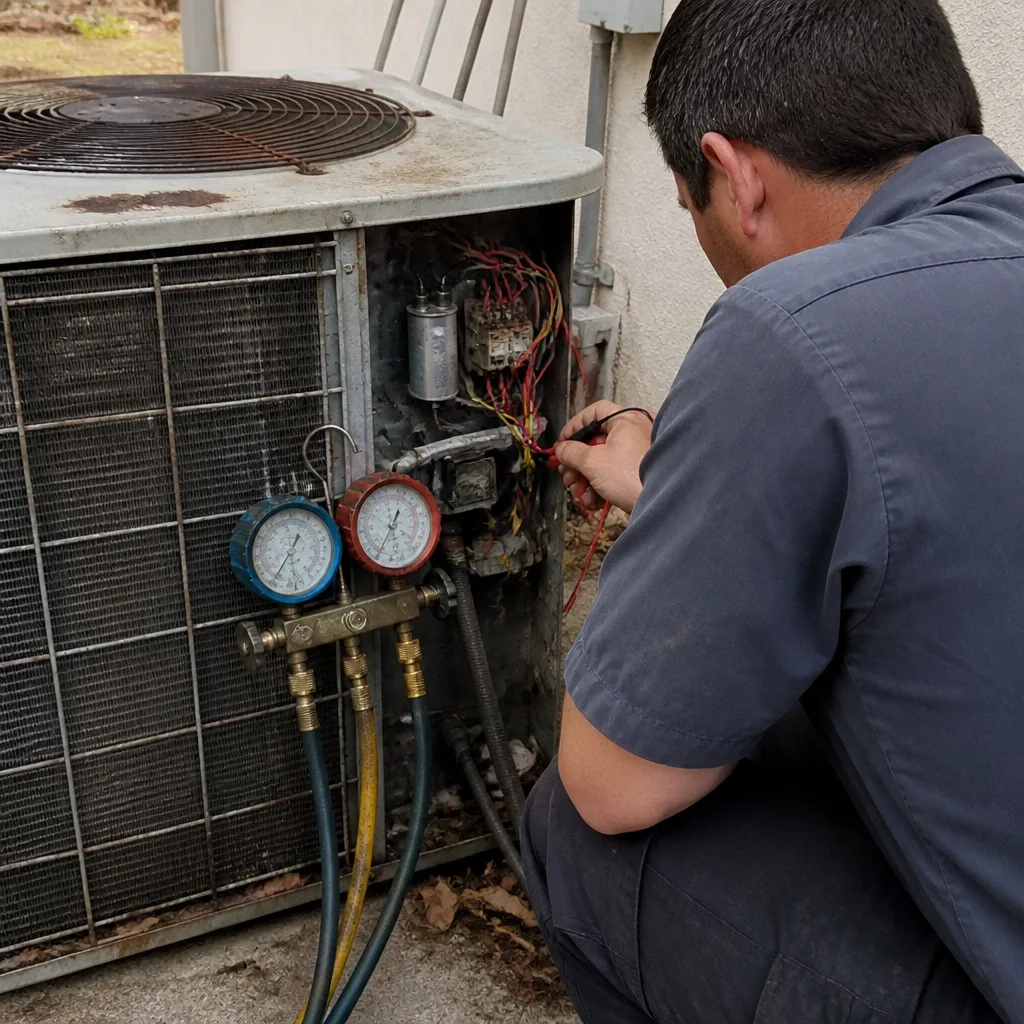 Before
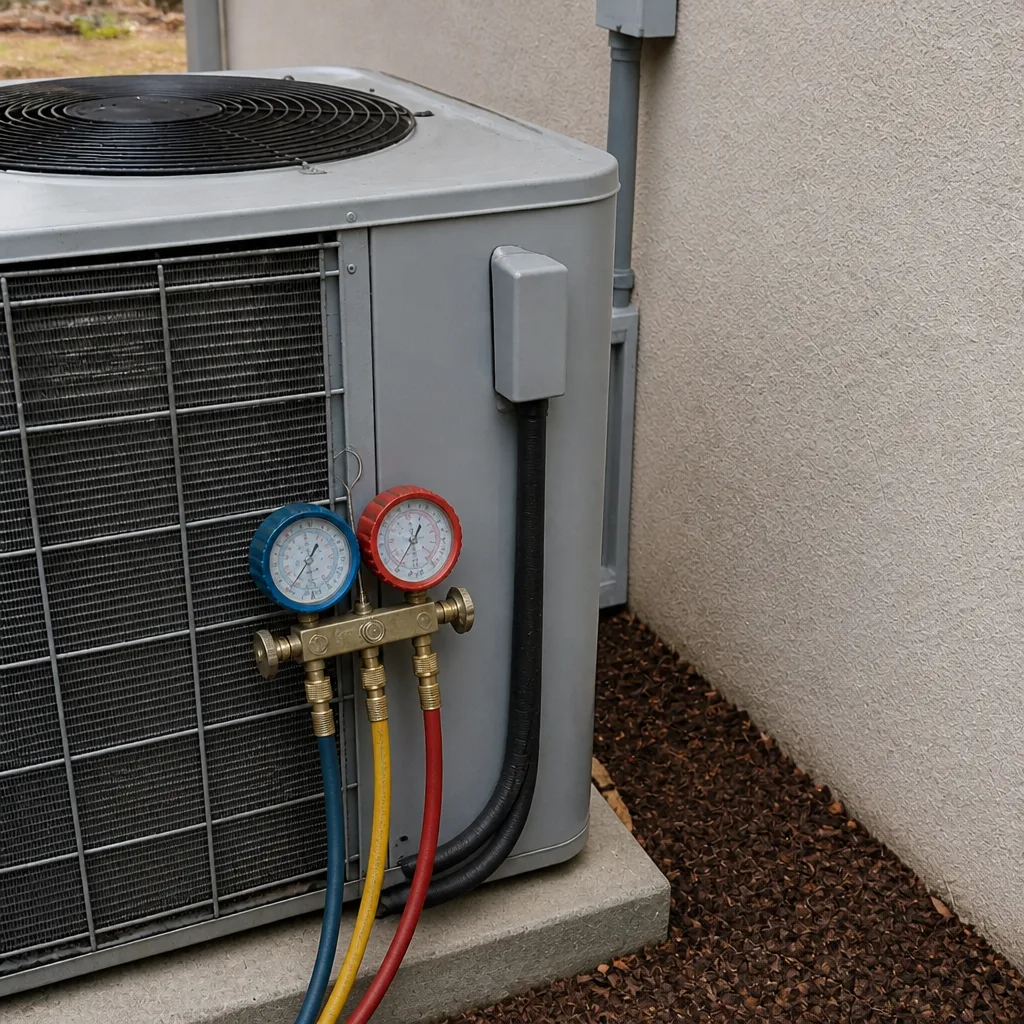 After
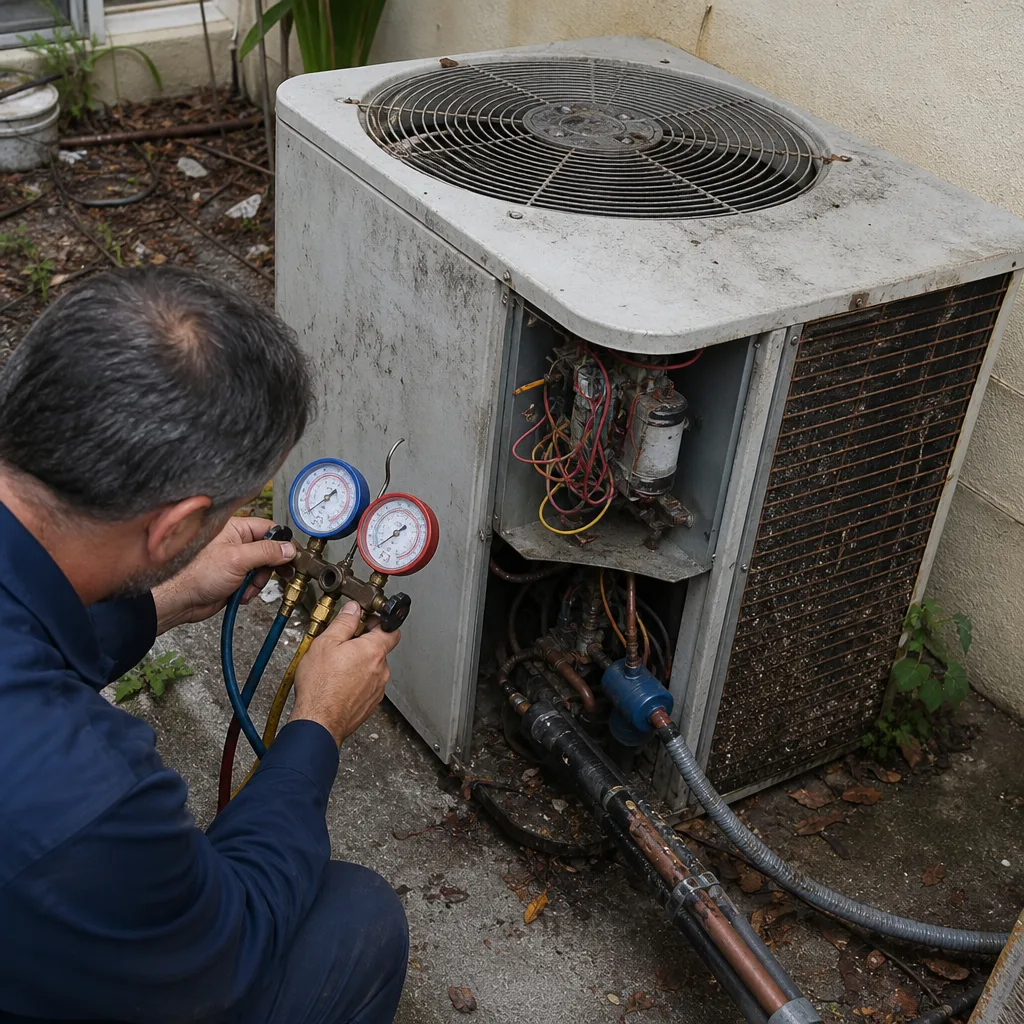 Before
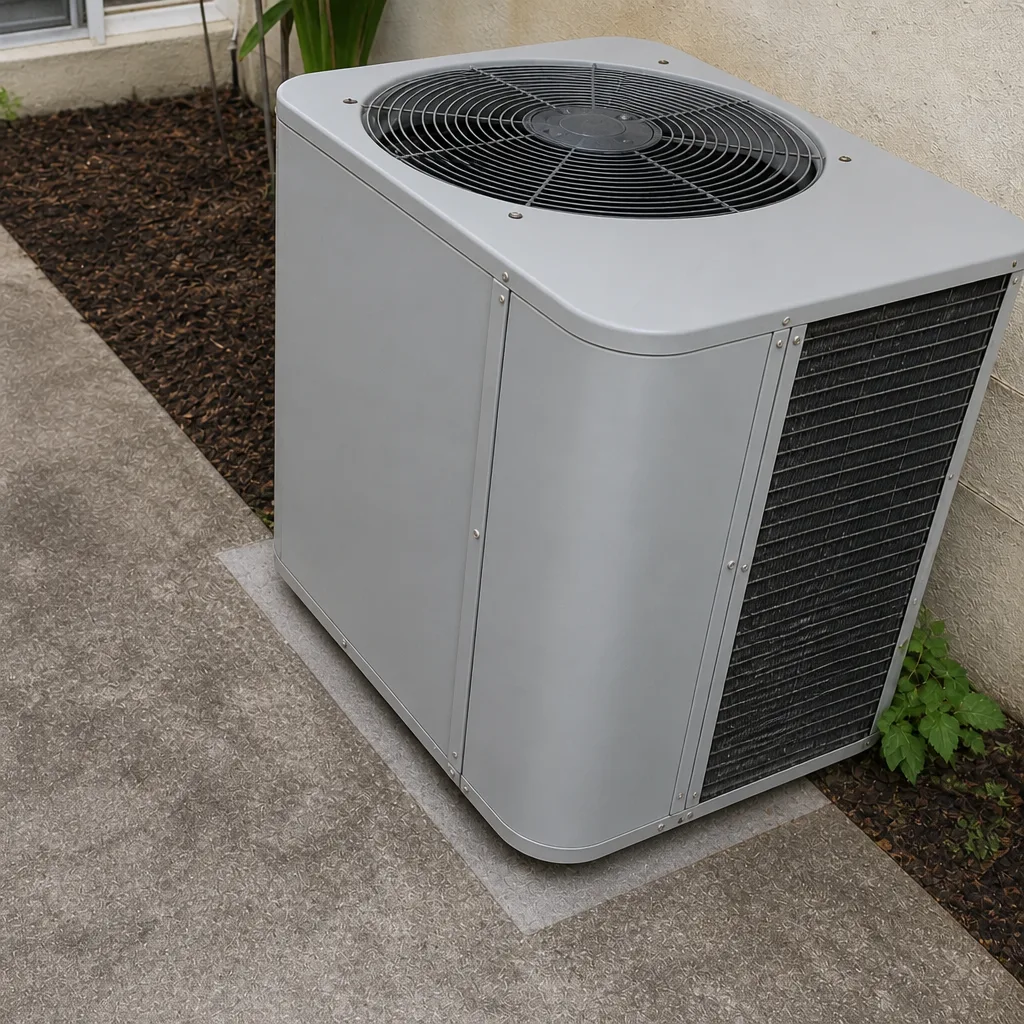 After
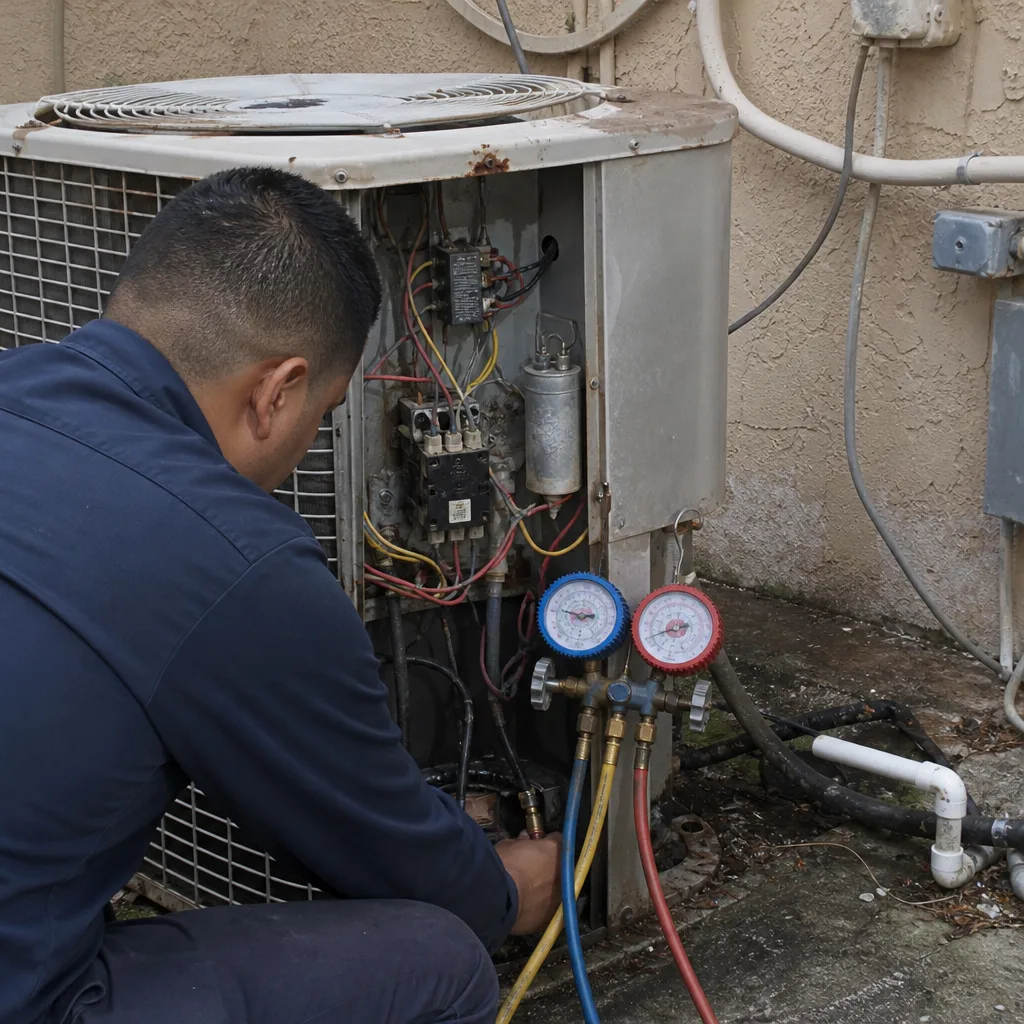 Before
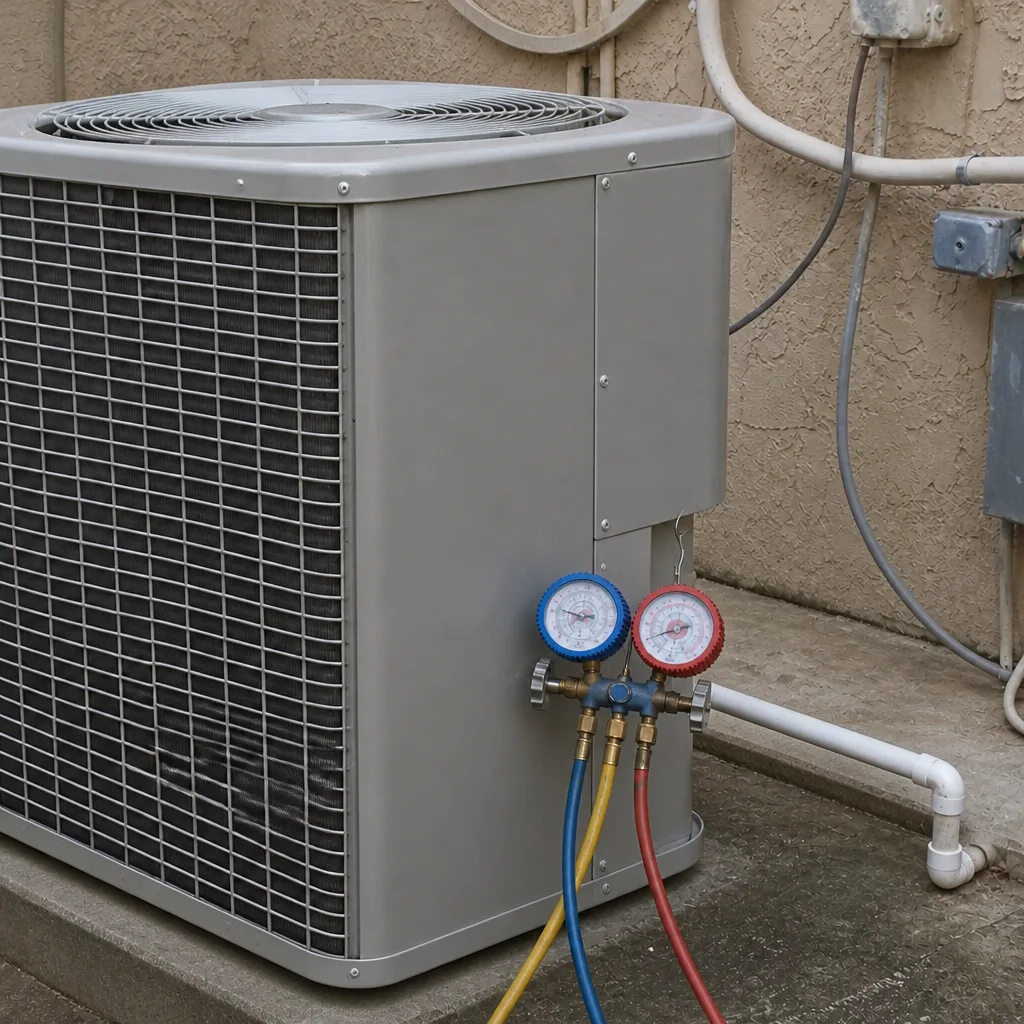 After
When to Call a Professional
Some HVAC work belongs in the hands of a trained technician, no exceptions. Call a professional if the system won’t start after you’ve checked the filter and breaker, if the breaker trips repeatedly, if you smell burning or see scorch marks, if the outdoor unit has taken on water or suffered storm damage, if refrigerant is suspected leaking, or if indoor temperatures have reached levels that threaten an infant, an elderly person, or someone with a heart or respiratory condition. Don’t open panels, add refrigerant, or bypass safety switches on your own. A short call solves the problem faster and safely.
Steadfast AC Repair offers free estimates in Miramar – call (855) 627-2574. We answer 24/7. Fast dispatch from 7am to 7pm, Sunday through Friday. Our technicians have up to 12 years of experience, and we work on nine major brands including Carrier, Trane, and American Standard.
Frequently Asked Questions
Get the system inspected and cleaned before the hottest weeks arrive, keep spare air filters on hand, and confirm the drain line is clear. The most useful preparation is a pre-season walkthrough with a technician who can spot a weak component before it fails. If you’re not sure where to start, call (855) 627-2574 for a free estimate.
Check the thermostat, confirm the breaker is on, replace a clogged filter, close doors and blinds on the sunny side, and use fans to keep air moving. If indoor temperatures approach dangerous levels for a vulnerable household member, call us right away. We answer 24/7, and we’ll tell you what you’re dealing with.
Turn the system off at the thermostat before the storm, confirm the outdoor unit is secure, clear the area of loose debris, and protect the condenser with a cover that comes off before the system runs. After the storm, inspect from a safe distance for water or damage, clear debris, then restore power and observe the system for a few minutes. Never run a system that’s under water or visibly damaged – call us.
It’s a true emergency when indoor temperatures risk the health of an infant, an elderly person, or someone with a medical condition, or when you see signs of electrical or fire danger. Otherwise it’s an urgent inconvenience that still needs a prompt visit but not an emergency dispatch. Being clear about which one you’re facing helps us route help where it’s needed most. Call (855) 627-2574 to talk it through.
It depends on the age of the system, the specific failure, and how it’s been performing. A small component repair is usually worth doing. A compressor or refrigerant failure on an older system is often the point to consider replacement. The right answer comes from a straight assessment, not a sales pitch. Call (855) 627-2574 for a free estimate.
We service nine of the most widely installed brands: Carrier, Trane, Lennox, Goodman, Rheem, York, Daikin, Bryant, and American Standard. That coverage means we’re unlikely to tell you we can’t work on your unit. If you’re not sure which brand you have, we can figure it out during the visit. Call (855) 627-2574 for a free estimate.
The Bottom Line
HVAC emergencies in Miramar cluster around heat events and storm season, so preparation is what separates a same-day repair from a week of waiting. Know the difference between a health emergency and an urgent inconvenience, keep a small safe kit on hand, follow the storm protocol, and establish a relationship with a contractor before you need one. Those four habits are the whole game. The forecast is predictable enough that there’s no good reason to be caught unprepared. If you’d like a straight assessment of your system or a plan for the season ahead, we’re ready to help. Call Steadfast AC Repair at (855) 627-2574 for a free estimate. Our technicians have up to 12 years of experience, and we’re trained on the brands your neighbors’ homes run on.
Written by the team at Steadfast AC Repair.